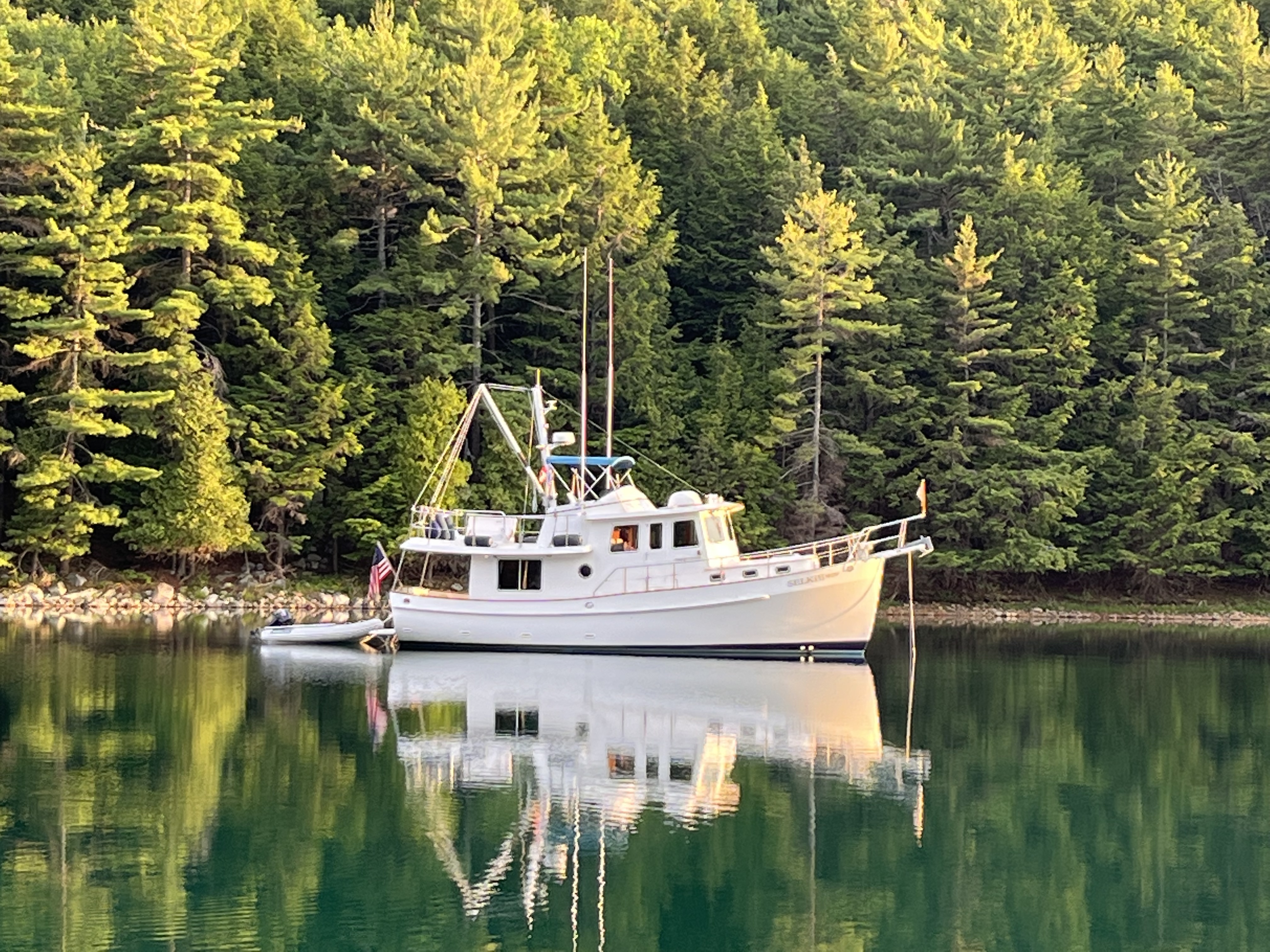
After a good night sleep, we left the following morning and bid farewell to Cape Canaveral.
As we headed north and turned east temporarily along the intercoastal waterway, we could see the launchpads and the infrastructure that NASA and space command had built up on Camp Canaveral to our south.
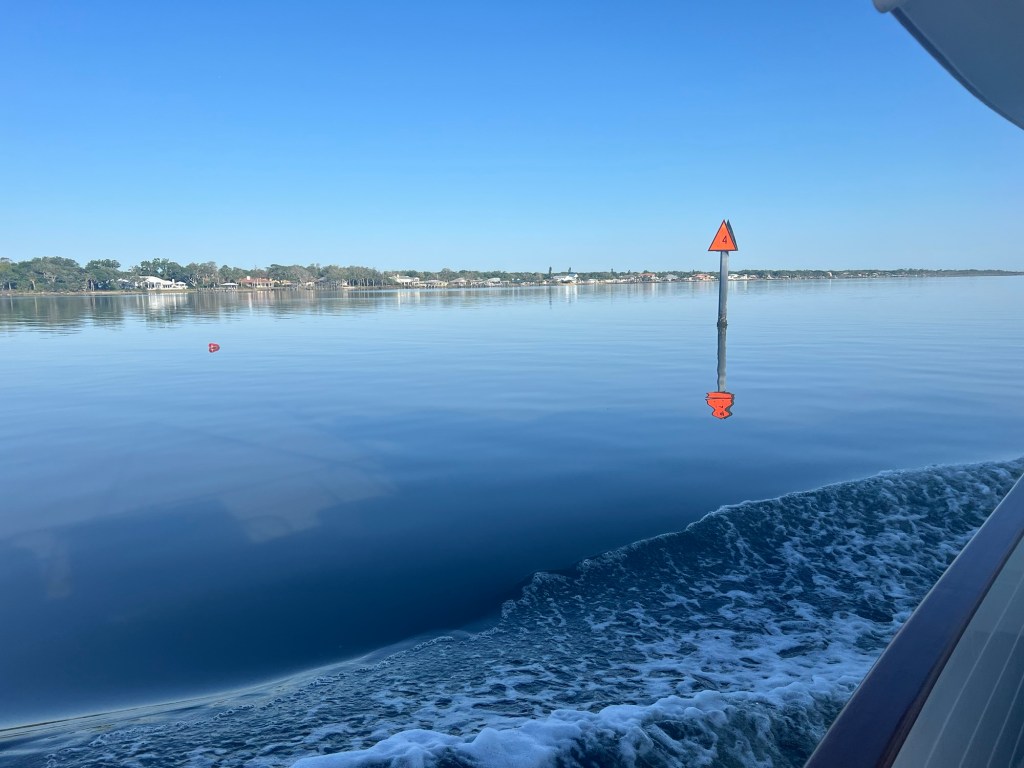
We could also see what I think was the new starship launchpad that was being built by SpaceX.
One of my thoughts about the starship launches is that it will be interesting to see how the Space Coast reacts to the behemoth starship launches.
They’re going to be louder and more acoustically active than the Apollo missions back in the day, and that was when the space programs were more supported by the general public.
With all the development in the area since Apollo (it’s amazing to see so many new buildings since I was a kid) we will see how the public reacts to the Starship launch and recovery of their primary booster. It’s going to be literally earth shaking.
The Space Coast is not Boca Chica, TX.
But back to the Loop!
We turned north away from the cape and continued our way towards Saint Augustine.
We planned a one night stop in Daytona at anchor to break the trip up.
We made it to Daytona without incident, and anchored just south of the main bridges leading across the intercoastal waterway.
Soon after we anchored, another boat came in, and started circling around for a spot to anchor.
The anchorage was pretty full, with not a lot of extra space.
After a while, I saw them aground on a shoal that was well marked on the charts.
It took them a few minutes to back themselves off. They polished their propeller while they were maneuvering, but they eventually got off and decided that anchorage was not for them.
Libbie and I had an uneventful night. We picked up anchor the next morning and headed to Saint Augustine.
We had a reservation for a mooring ball in the municipal marina’s mooring field in Saint Augustine. We called them on the VHF radio to get our mooring number.
Following the directions of the harbormaster we found our mooring ball and tied up.
Being on a mooring ball is a little less stressful than anchoring as we don’t worry about whether the anchor is set or not, or with the potential to break free during a tide switch.
We launched our dinghy and jumped in for a ride over to the marina. We checked in with the Harbormaster, got our dinghy tag and proceeded to shore.
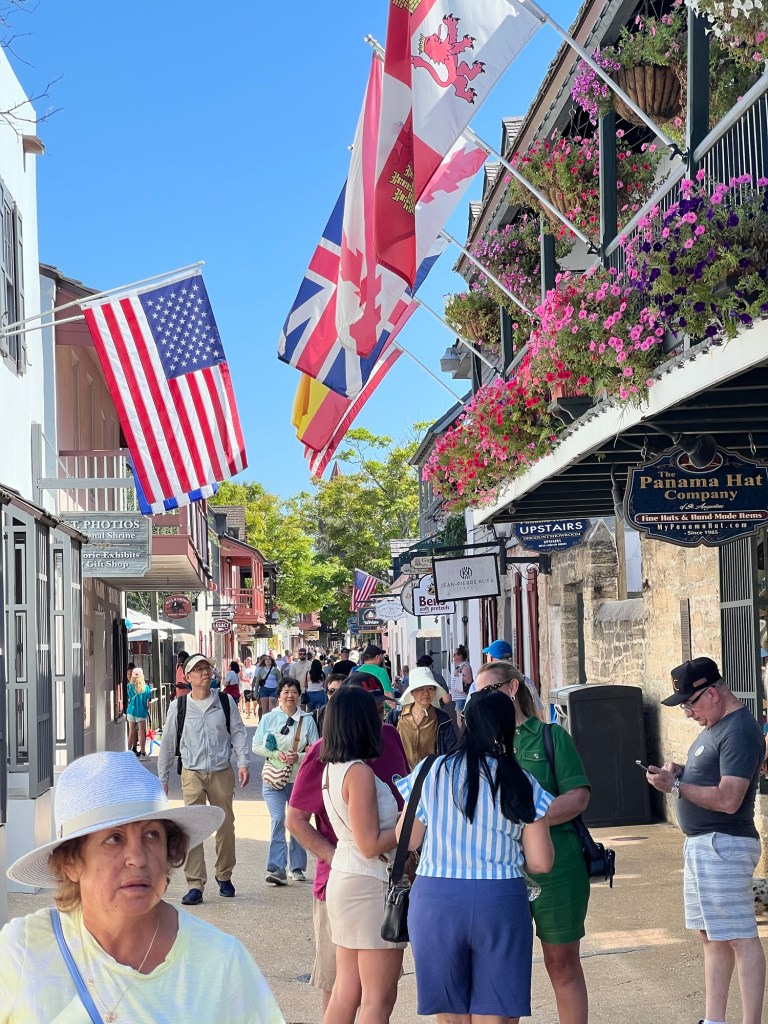
We had a great afternoon walking around the area. Anyone who visits St. Augustine knows about the shops, restaurants and general tourist type attractions. It’s a great city.
What many people don’t realize is how old St. Augustine is.
St. Augustine is the oldest continuously inhabited European-established settlement in the continental US.
The city was founded by Spanish explorer Pedro Menéndez de Avilés in 1565.
The area became a strategic outpost for Spain, designed to protect shipping lanes and fend off rival European powers. As a result, St. Augustine was burned, sacked, and rebuilt multiple times.
The city’s layout and infrastructure reflect a blend of Spanish, British, and later American influence.
The town remained a quiet military outpost through most of the 19th century but became more prominent in the late 1800s when developer Henry Flagler turned it into a tourist destination for wealthy Northerners.

St. Augustine is a pretty cool stop on the Loop.
We walked over to the Castilla de San Marcos Fort. The fort is a national historic landmark managed by the National Park service. Libbie happened to have her gold senior national Park pass with her. We went into the fort to look around.
The Castillo de San Marcos, is the oldest masonry fort in the continental United States.
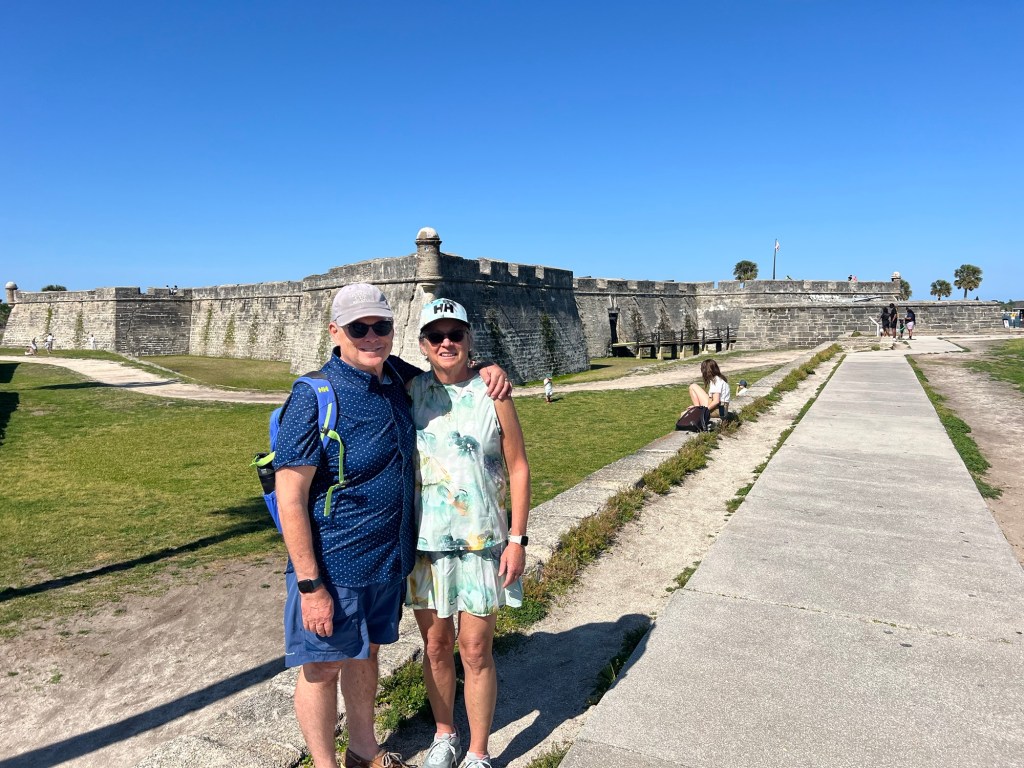
Construction began in 1672 by the Spanish Empire, following repeated attacks on the earlier wooden forts defending the city by the British.
Built from coquina, a sedimentary rock made of shell fragments, the fort proved highly resilient to cannon fire. Its construction marked a shift in Spanish colonial strategy, with a clear emphasis on more durable, permanent military infrastructure to defend key positions in the New World.
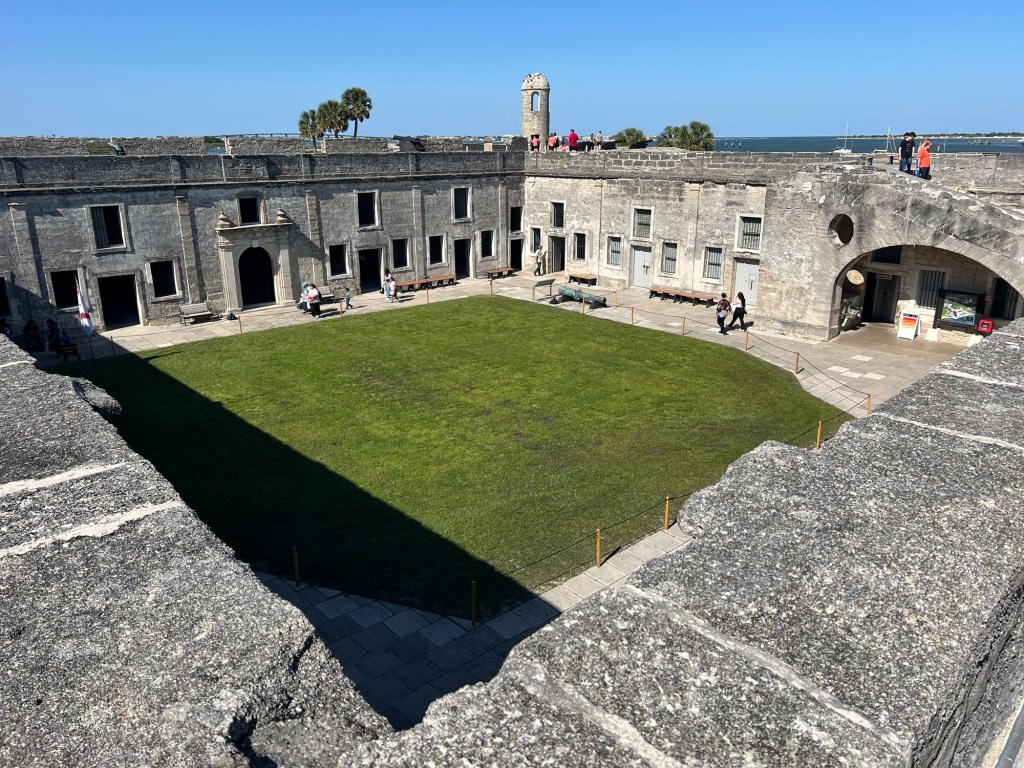
In modern times, it’s a mandatory field trip for fourth graders who live within a day’s drive because of its historical significance, and because it’s a captivating venue.
It’s very similar to the program for fourth graders in California who are required to study the missions that sprung up during the 1600’s there.
Throughout its history during the occupations by the Spanish, British, and the US, the fort changed hands multiple times but was never taken in battle.
It withstood British sieges in the early 1700s and later was ceded to the British in 1763 under the Treaty of Paris, then back to the Spanish in 1784, and finally to the United States in 1821.
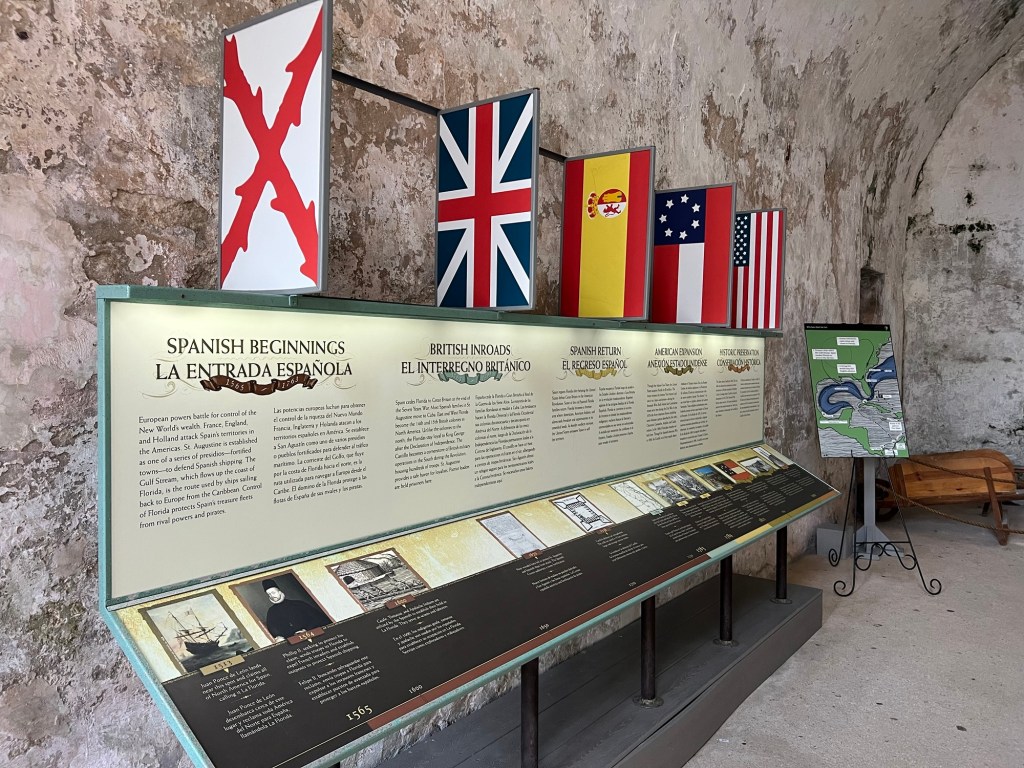
The fort’s military function continued during the Seminole Wars and served as a prison during the Civil War and later for Native American detainees, including Geronimo’s followers.
Eventually, the fort lost strategic importance and was decommissioned in 1900.
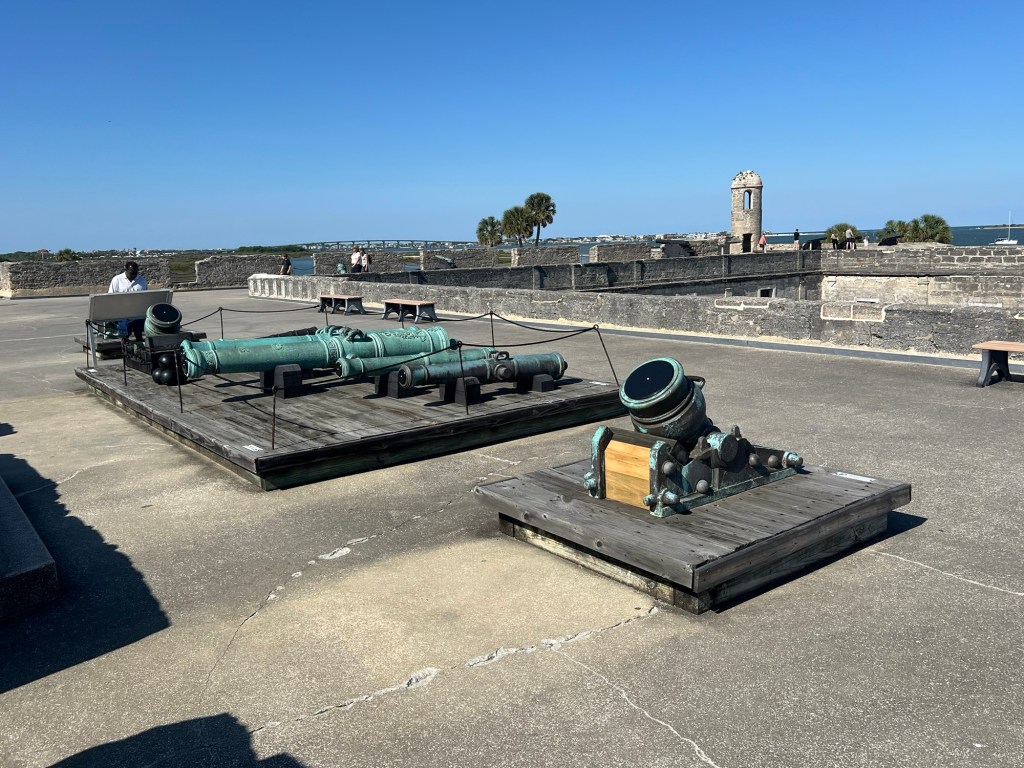
It was designated a National Monument in 1924 and is now managed by the National Park Service.
After touring the fort, Libbie and I went back to the shopping district where the restaurants were.
We chose a restaurant that had been recommended by the Marina Harbor staff. We were not disappointed. Libbie had a Caesar salad top with some mahi-mahi. We both agreed it was some of the best mahi-mahi we’ve ever had. I had mussels and linguine and that was also excellent.
Wrapping up our evening, we went over to the marina, and hopped in our dinghy. We motored back to Selkie and settled in the evening. We found the Golden State Warriors playing Memphis to get into the NBA playoffs. The good guys won.
It was a great day and we enjoyed our day in St. Augustine.
The next morning we woke up, went back to the marina and did an hour walk around town before we took off. We turned in our gate keys to the marina, hopped board Selkie and cast off.
We were very close to finishing our Florida stay after first arriving in November 2023.
Florida was a great stay for us. The waterways, the wildlife, the fishing, all the sites to see, they were all wonderful. We want to come back to visit.
But it was time to move on to our next state, Georgia.
Off we went, checking off another state on our Great American Loop.


One reply on “St. Augustine”
great stuff. The adventure continues!!
LikeLike