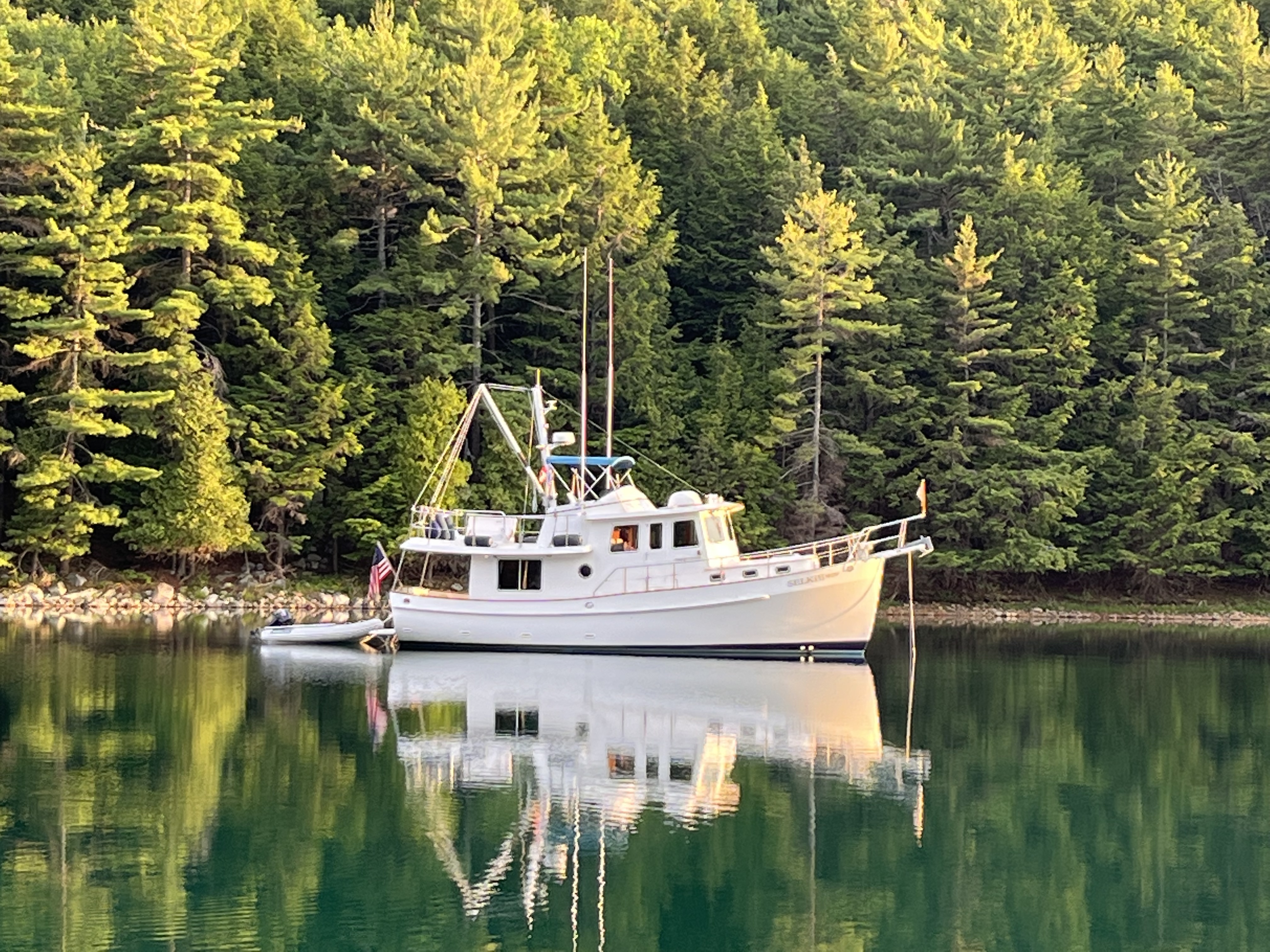
It was time to finally head out for the Florida Keys.
The next morning, we raised anchor in Russell Pass and headed south to the Little Shark River.
By now we were used to traveling in the shallow waters of the Gulf of Mexico.

It’s a little unnerving at first traveling at full speed, with only three feet of water under your keel.
But one learns to trust the navigation charts.
We had two excellent weather days ahead of us. They provided great travel conditions, with warm weather, bluebird skies and calm seas.
Using the Nebo application, a boating social app, I could count almost a dozen Looper boats moving south like us, even if we could not see most of them over the horizon. Everyone apparently had targeted the next two days to travel like us.
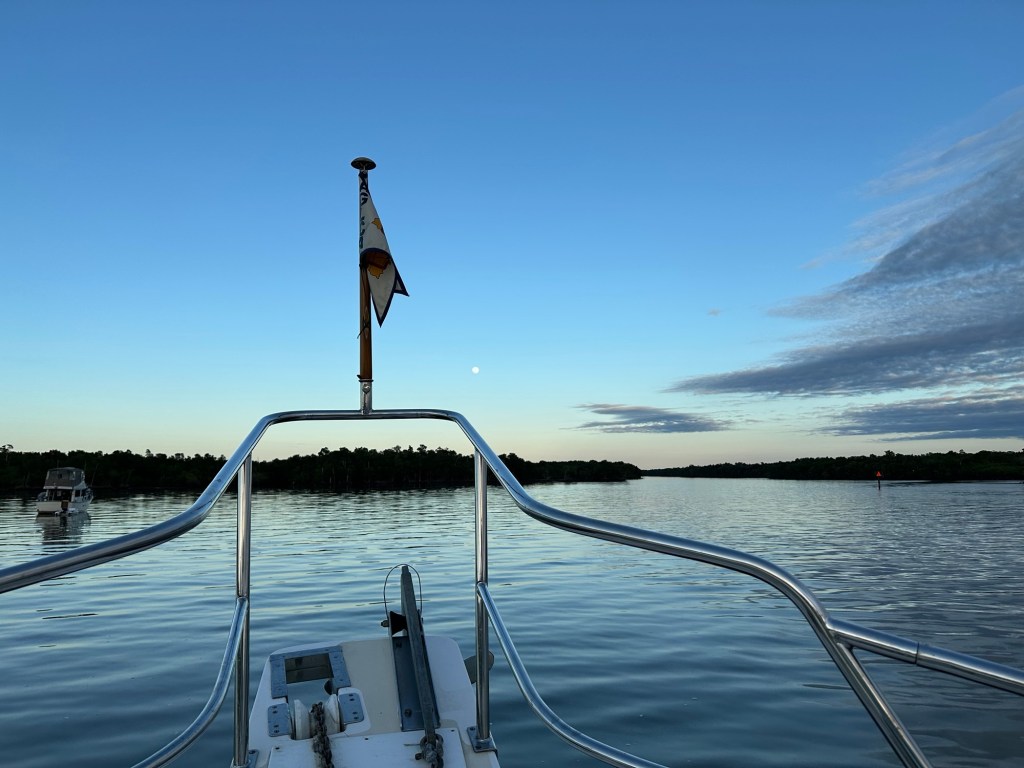
We pulled into the Little Shark River entrance and dropped anchor.
It seemed like the anchor set in an oyster bed as it set hard after bouncing a couple of times.
As we settled in, we launched the dinghy. Libbie had to try her new fishing techniques.
I had the usual shutdown-after-anchoring checklist to go through, so I handed Libbie the handheld VHF radio so we could stay in communication in case of a problem.
We discussed a couple of areas she could fish.
Libbie set out with all her gear, excited to give it a try.
I went about my business on Selkie.
Suddenly, Libbie called over the radio, “Tad, there’s a huge alligator over here!” She estimated the beast yo be longer than our dinghy, which is just under ten feet.
I looked over to where she was about 500 yards from the boat.
I couldn’t see any alligator but I could see Libbie motoring away from shore at a brisk pace.
We talked about where the alligators may or may not be.
As alligator areas aren’t typically marked on a chart, Libbie decided to come back to Selkie.
I caught the dinghy line, tied her off and Libbie proceeded to just fish from the dinghy.
Sadly, she got skunked.
If I had gone with her, we might have been ok and she would have caught some fish.
On the other hand, we might have disappeared forever, victims of an alligator or python attack.
Who knows?
Everglades National Park, located in southern Florida, is the largest subtropical wilderness in the United States and a UNESCO World Heritage Site.
Covering 1.5 million acres, it is a unique ecosystem dominated by wetlands, sawgrass marshes, mangrove forests, and coastal estuaries.
The park plays a vital role in protecting the habitat for a diverse array of wildlife and serves as a critical freshwater source for much of South Florida.
The Everglades are home to numerous species, including alligators, crocodiles, manatees, wading birds like herons and egrets, and endangered species like the Florida panther and the West Indian manatee.
The park has three distinct ecosystems:
There are expanses of grassland, often dotted with tree islands
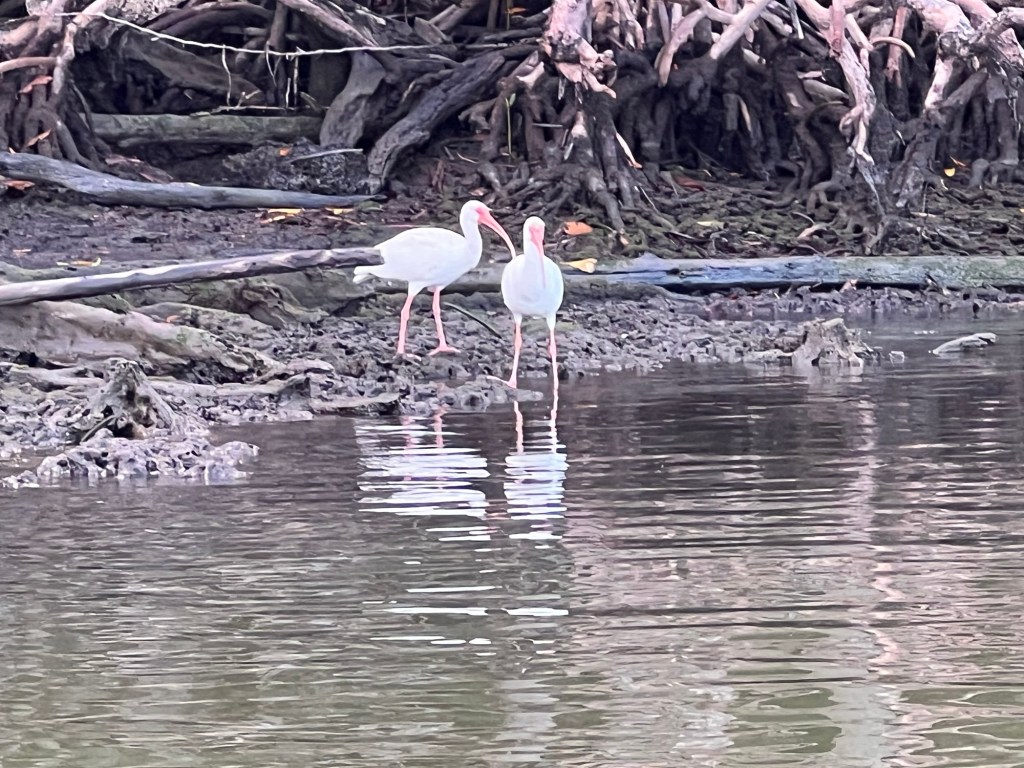
The park has coastal areas with salt-tolerant mangrove trees that provide crucial habitat and protection against erosion.
Inland forests and swamps with diverse plant life make up the balance of the park’s ecosystem.
The park is crucial for water filtration, flood control, and preserving the natural heritage of South Florida.
It also carries cultural significance for Indigenous groups, including the Miccosukee and Seminole Tribes.
After completing my chores on Selkie, Libbie and I did one of our favorite activities: a sunset cocktail cruise.
We loaded up with a couple of drinks and puttered up the river looking at all the wildlife. It was lovely.
Other than a couple of other Looper boats, and some fishermen, we were the only people within a 20 mile circle.
There was no cell service, and the VHF radio was our only means of communication.
We admired the mangroves and the bird population. Some dolphins swam by. It was a beautiful evening.
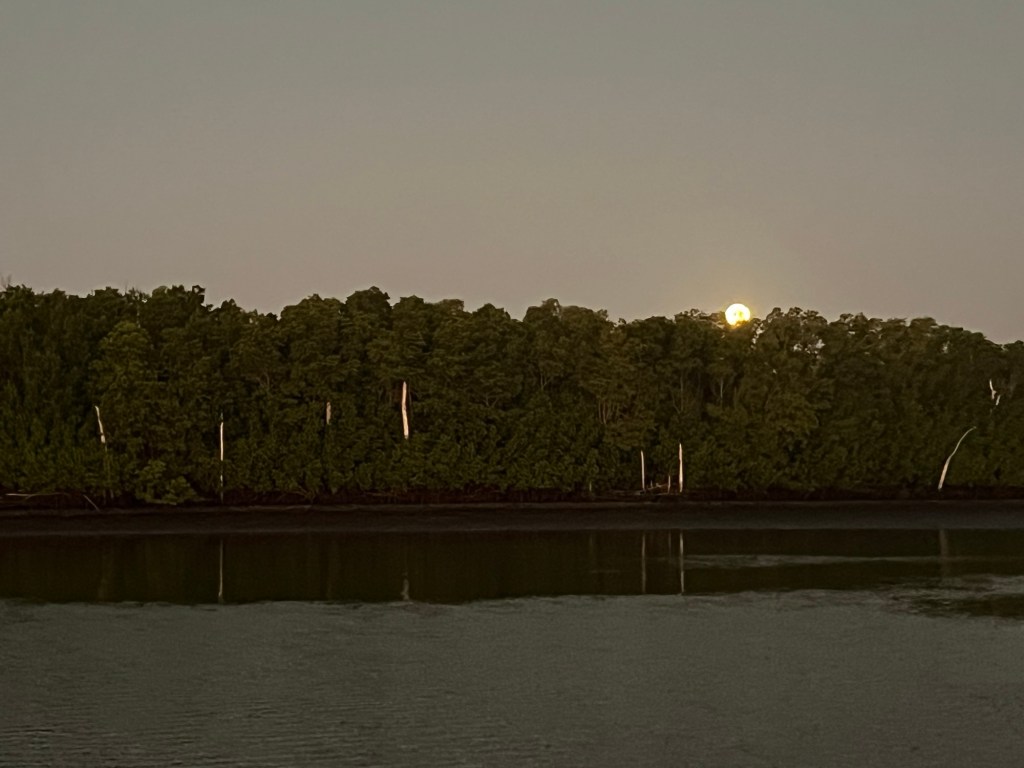
The next morning we witnessed a wonderful sunrise with a full moon setting.
We made breakfast, and headed off to the Florida Keys.
It was a beautiful day. Again there were blue skies, and calm water without a ripple.
As we headed further south, we passed by the southern part of the Everglades.
I recalled a memory of Christmas in Flamingo, Florida, the southernmost town in the Everglades. My family went when I was in early elementary school.
My grandparents brought my family down to stay in Flamingo.
I remember elevated nature trails over the swamps, teeming with fish, birds and alligators. There were campfire rangers talking about the wildlife… and the stars.
The night sky looked much different down south than when I grew up in Michigan. I remember being fascinated by the stars being in a different place.
The rangers claimed we could see the Southern Cross from the Everglades. After seeing the Southern Cross in New Zealand, I think they were fibbin’ us. It is a distant but fond memory.
As we continued down, the crab pot buoys became more numerous. Further north, you could discern the neat line of pots that the fisherman laid down, and it was easy to avoid them.
Further south, it seemed like the fisherman were dropping acid. There was no rhyme or reason to the pattern. So we had to dodge them left and right.
We came close a couple of times. But we didn’t wrap any buoy lines around the propeller shaft.
As we headed south we noticed the water suddenly became very clear. We could see the bottom very easily.
We had not seen water that clear since northern Lake Michigan.
It was about this time that we rolled over 5,000 miles on the Loop. By now it seemed almost routine, even with such momentous milestone for us. We are starting to smell our wake crossing when we arrive back in Maryland.
It took us about 3 hours of dodging crab pots to get to the Keys.
We bypassed our eventual final destination as we were a day early for our reservation at Faro Blanco Resort.
We went directly to an anchorage in Little Pine Key and dropped anchor one more time.
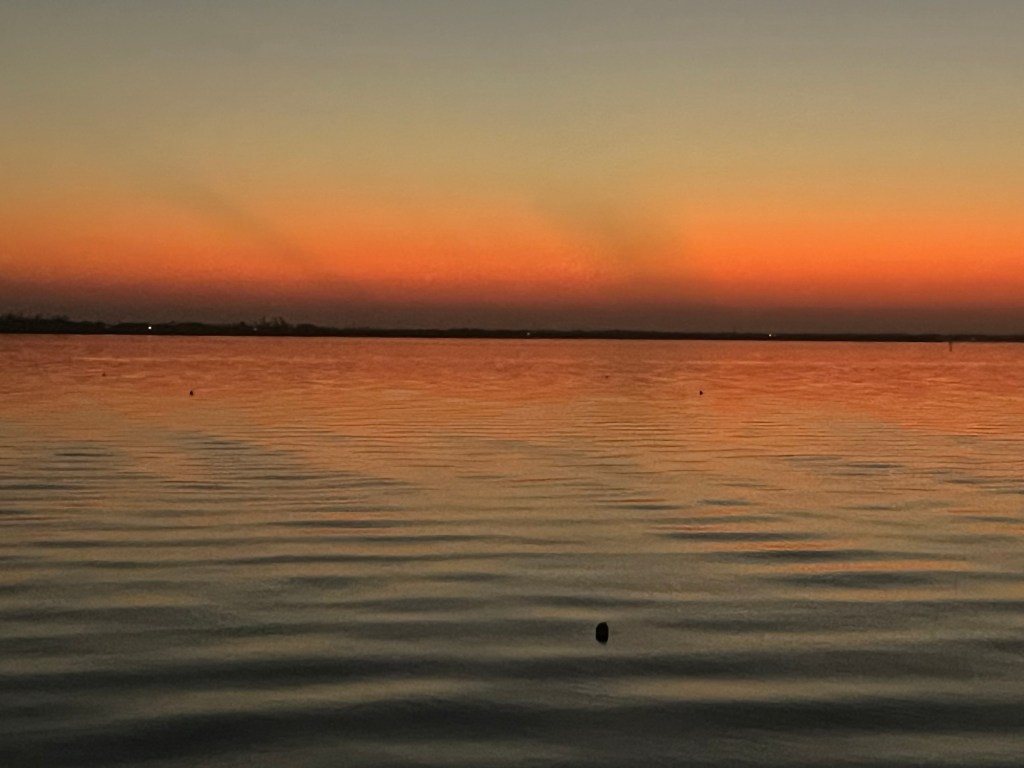
We made it.
We had arrived in the Florida Keys.

 Selkie
One reply on “Little Shark River and Arrival in the Keys”
Don’t you mean “the shallow waters of the Gulf of America”?
M & B in Spain
LikeLiked by 1 person