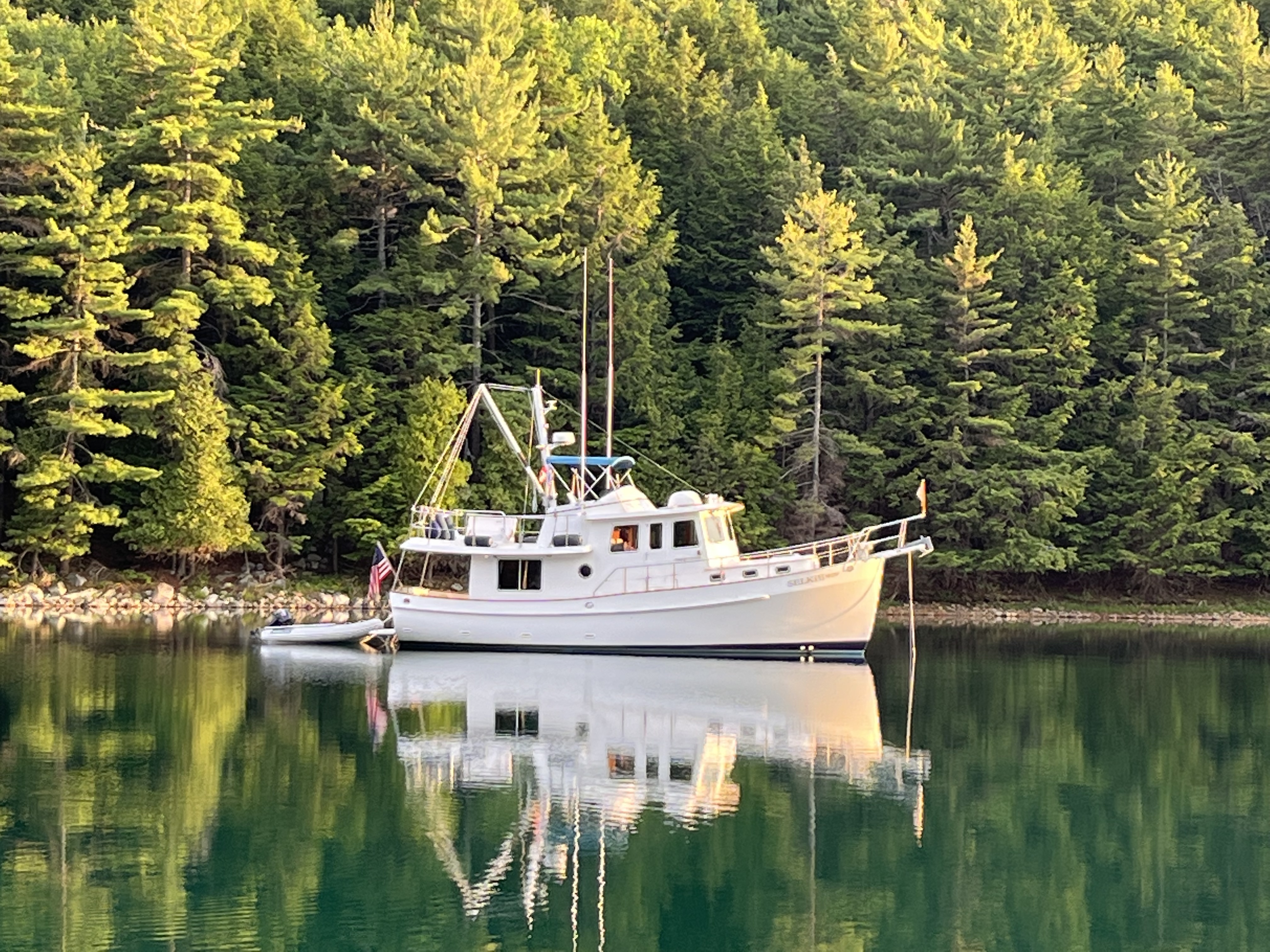
When we return to Selkie from our weeks-long break, we are going to be transitioning to a new style of cruising for a while: the US River System.
Up until now, the waterways we’ve traveled have not been dominated by commercial traffic.
When we return to Selkie, it will be another story.
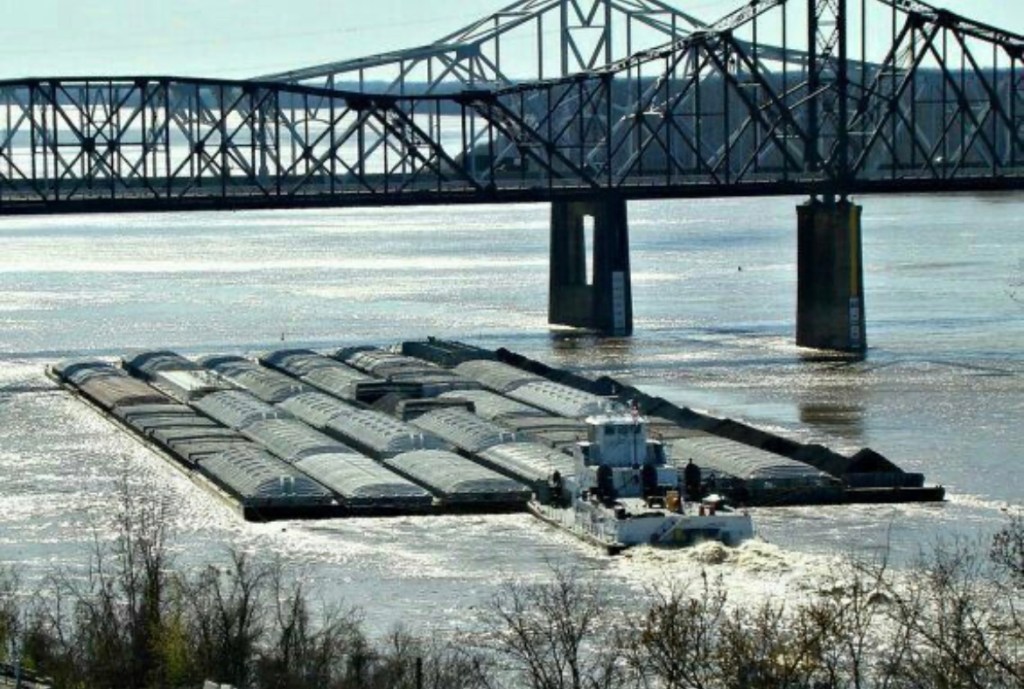
The vast majority of river traffic are commercial tows often made up of gigantic barges pushed by gigantic tugs.
An interesting fact is that even when a tug is pushing one or more barges on the rivers, it’s called a tow.
We will be following a different “rules of the road” as well.
Sometimes the bouys will be not in the right place, or missing entirely because a tow ran over it.
In terms of the River System, we will traverse the Illinois, Mississippi, Ohio, Tennessee and Tombigbee Rivers from Chicago, Illinois to Mobile, Alabama.
The Army Corps of Engineers describes the northern part of these waterways as follows:
“The Upper Mississippi River – Illinois Waterway System includes 37 locks and 1,200 miles of navigable waterway in Illinois, Iowa, Minnesota, Missouri, and Wisconsin. The U.S. Army Corps of Engineers manages the 37 locks and dams on the Mississippi and Illinois rivers providing a water stairway of travel for commercial and recreational traffic from Minneapolis-St. Paul to St. Louis and from Chicago to the Mississippi River.“
“The 866 miles of the Upper Mississippi River begin in Minneapolis, Minn., and end at the confluence of the Ohio River at Cairo, Ill. The 333 miles of the Illinois Waterway start in the Chicago Area Waterway and continue downstream to the Illinois River’s confluence with the Mississippi River at Grafton, Ill. The Illinois Waterway is composed of seven water systems: Illinois River, Des Plaines River, Chicago Sanitary and Shipping Canal, South Branch Chicago River, Cal-Sag Channel, Little Calumet River and the Calumet River.“
“There are more than 580 manufacturing facilities, terminals, grain elevators, and docks that ship and receive tonnage in the Upper Mississippi River basin. Grains (corn and soybeans) dominate traffic on the system. Other commodities, mainly cement and concrete products, comprise the second largest group. A modern 15-barge tow transports the equivalent of 1,050 large semi-trucks (26,250 cargo tons, 875,000 bushels, or 17,325,000 gallons). In 2015, the 9-foot channel project generated an estimated $3 billion of transportation cost savings compared to its approximately $246 million operation and maintenance cost.“
These rivers provide the backbone of much of the commercial transportation in the US’s Midwest. It will be a change for us after doing the little Trent Severn in Ontario last year.
When those locks reopen on or before September 30, there look to be close to 300 Looper boats queued up to go the first week of October in addition to all the other pleasure craft and the hundreds of barges waiting and full of harvested corn and soybeans, coal for power plants, ore for manufacturing, and building materials like gravel for construction will start to be pushed by their behemoth tugs again.
Therefore, it will be crowded to start, and so we will delay until the 2nd week to avoid the herd before we head down the river system.
The Loopers are ready though.
We’ve organized ourselves into 25 flotillas of roughly 16 boats each.
One flotilla will start each day.
Each flotilla had a leader who is in communication with the other flotilla leaders, relaying information back and forth on the Illinois River.
Selkie will start in the 12th flotilla, and yours truly has been appointed the leader of Flotilla 12…
Buckle up, everybody!
We will be moving through the Illinois River in 4 days, clearing the way for the flotillas behind us and praying the the flotillas ahead of us don’t run into problems.
As I said in the beginning, The River System will be a different experience than what we have experienced so far.
The facilities we will encounter are big dams and associated locks, with big drops, big currents and competition with the commercial tub-barge combinations that ply those waterways, much different than the Erie, Oswego, and Trent Severn Waterways which were built for mule-drawn barges initially.
We expect to be delayed some days, and either be able to lock through first thing in the morning or last thing at night for some locks. We also expect to do it with a bunch of other Loopers going through the locks with us.
Reports from friends that went before us state that although things are different, with patience it will be a lot of fun.
Although many of the locks have elevation changes of 10 to 30 feet, the biggest locks will have a more than 80’ drop, and are the size of at least 6 six football or soccer fields to handle the commercial barge traffic. A standard lock size in this area is 600-feet long by 110-feet wide. To compare, the smaller locks on the Trent Severn were 84-feet long by 23-feet wide.
These River System locks will dwarf Selkie as will the tows.
We will have to be careful to get around the tows. The captains of the tows will tell us where to go… we certainly don’t want to get in their way or inhibit their passage in any way.
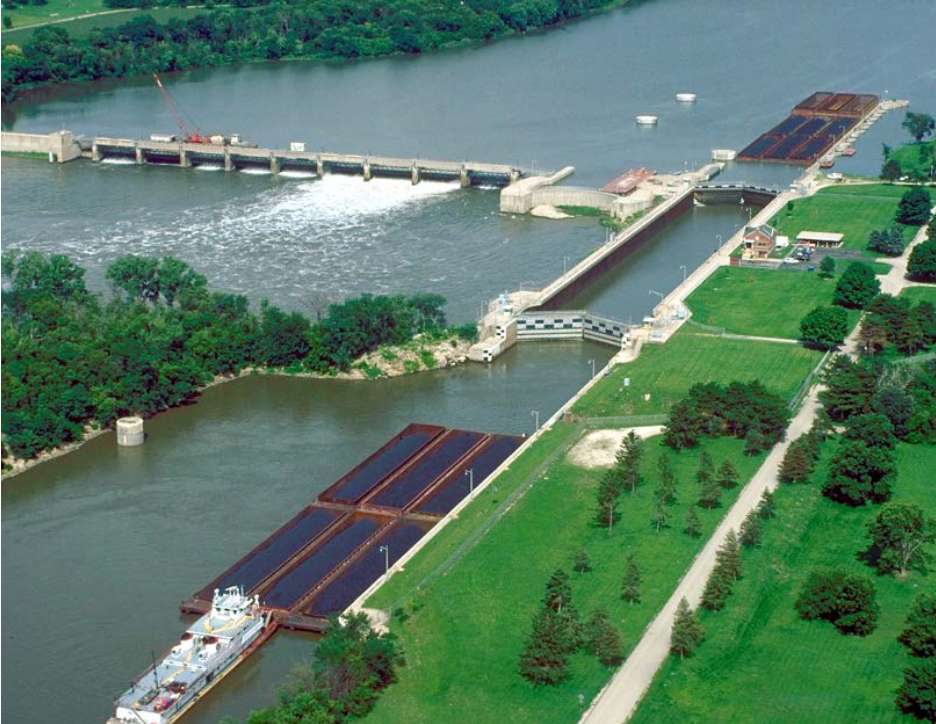
Illinois River Dresden Island Lock & Dam Photo by Army Corps of Engineers showing a tow maneuvering through.
Some tows can be 7 barges wide and 6 barges long, resulting in a behemoth tow that is close to ¼ mile long, as long and wide as one of the US Navy’s Nuclear Aircraft Carriers, or one of the thousand footers on the Great Lakes.
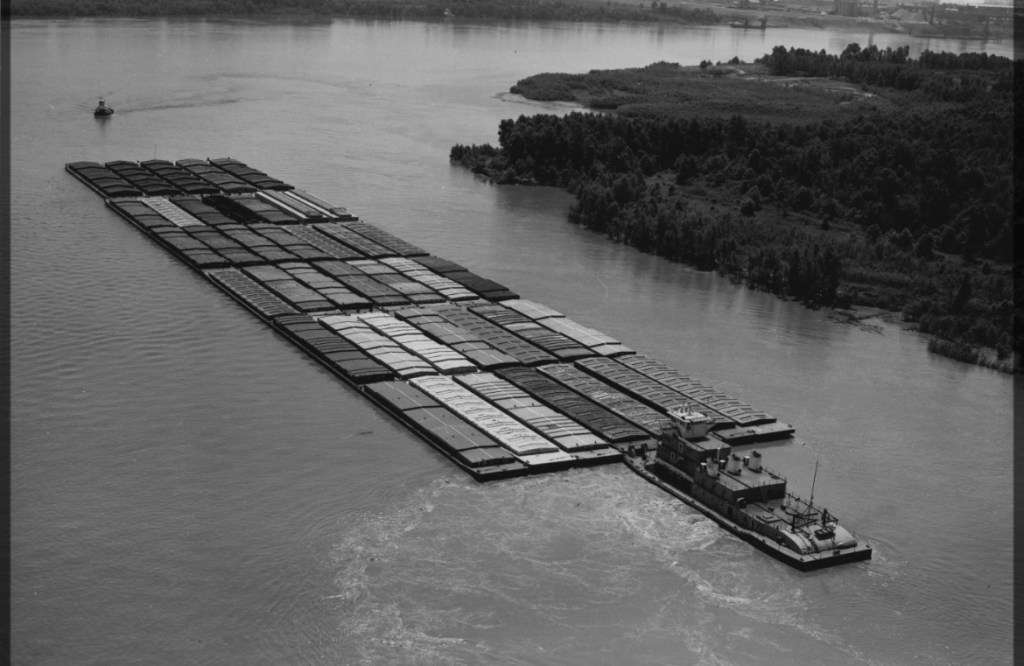
The American Great Loop Cruisers Association (AGLCA) has a good description of what to expect on the rivers while maneuvering around these tows. Included in the AGLCA description is how we communicate with the tows.
“Communicating with Tows – Tows will be pushing multiple barges along the river. They enormous and cannot maneuver or stop quickly. Always contact tows via VHF to make plans for meeting or overtaking. Tow Captains will tell you to pass on the “1” or “1 whistle” or on the “2” or “2 whistle”. This dates to prior to VHF communications when whistle blasts would be used to communicate. Whether you are meeting or overtaking, if the tow wants to see you on the “1”, point your bow to the right/starboard. If the tow captain wants to see you on the “2”, point your bow to the left/port.”
This sounds like an interesting time confronting one of these huge tows for the first time.
It will be interesting to say the least.
I hope we get a little rest while we are off Selkie.
We are going to need it.

 Selkie
2 replies on “Navigating the River System”
Wow or wow again….really fascinating information and a bit terrifying. I know you and Libbie are up for the challenge. Congrats on being named leader of Flotilla 12. This is going to make an epic experience to share with the grandkids as well. Thanks for another fantastic write up Tad. Best of luck! Allison T
LikeLike
Wow!!!!! Sounds very thrilling actually … what is the policing agency for river traffic? Like … if you’re involved in an accident or a dispute? Is there arbitration? Are there water patrols????? And under what flag do you travel? Is there pirating on these large bodies of water like in the open seas? Sounds like a whole different world to me. I live in the throes of the remaining Wild Wild West … you are in a different wild wild place. Is lawless a possibility there? Texas P/ the cow lady
LikeLike