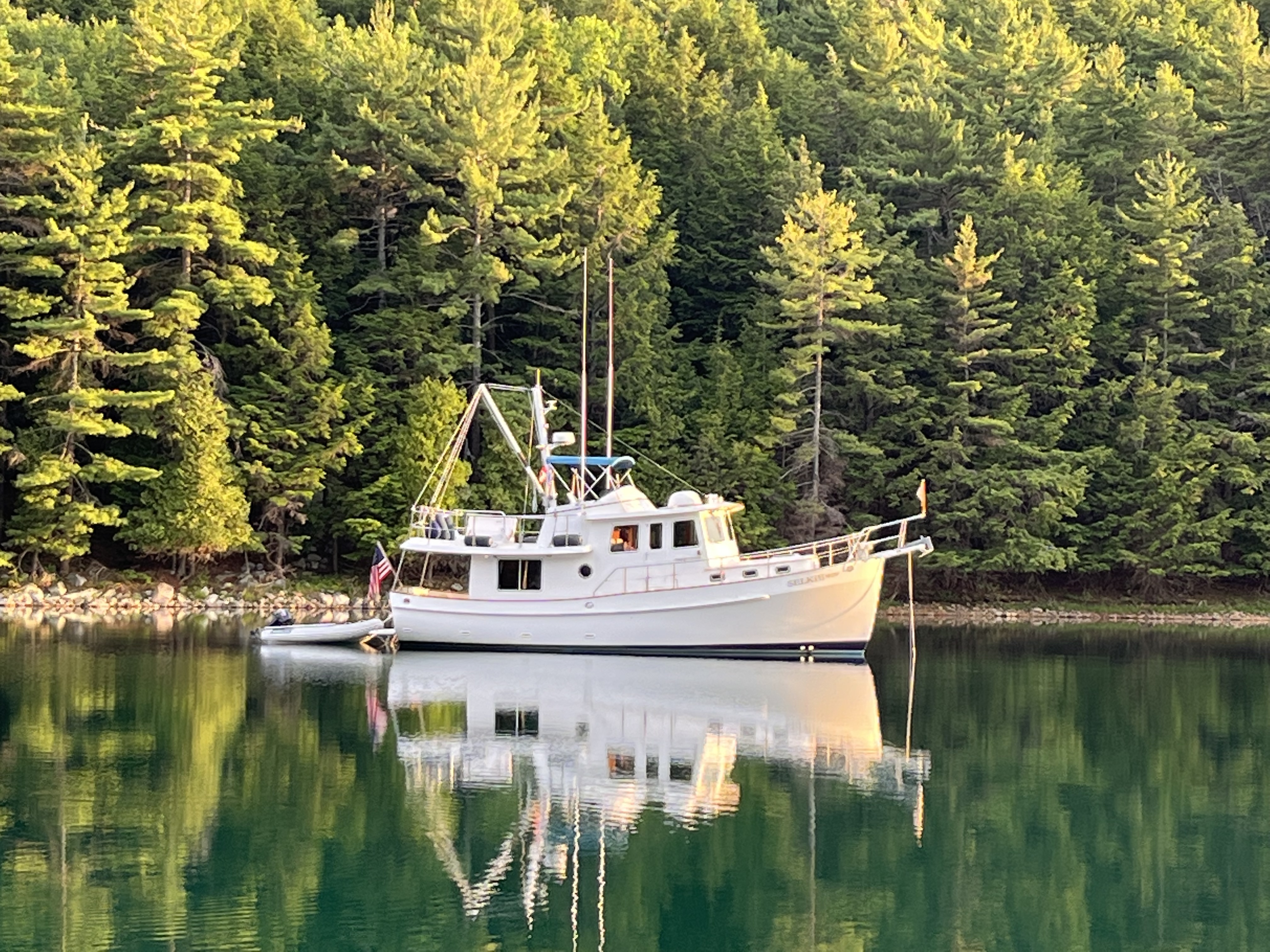
We arrived at Bohicket Marina on Seabrook Island.
That would be our home for a week so Libbie could participate in her tennis tournament.
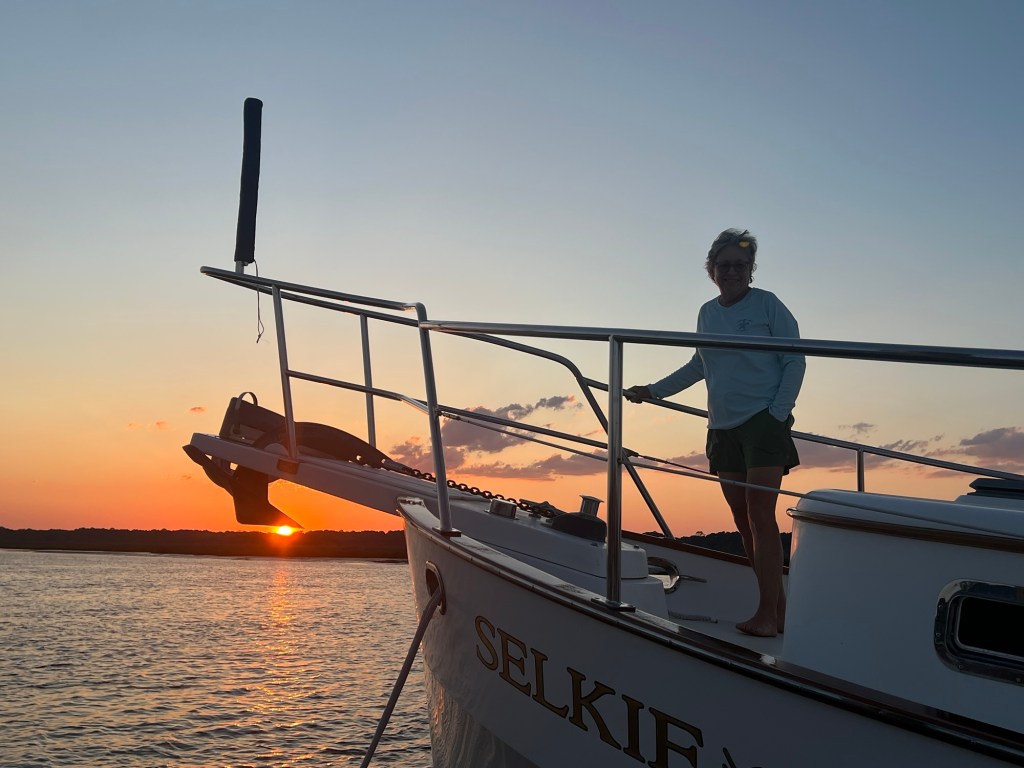
We arrived at Bohicket without incident and met up with Libbie‘s tennis team.
We had a great dinner at the restaurant there at the marina.
The next day Libbie started her tennis tournament. I rode my bike to watch a match and then came back to the boat to get some work done.

That weekend, Libbie finished the tournament. She had a great time.
The next morning we cast off and headed for Charleston for a two nights stay.
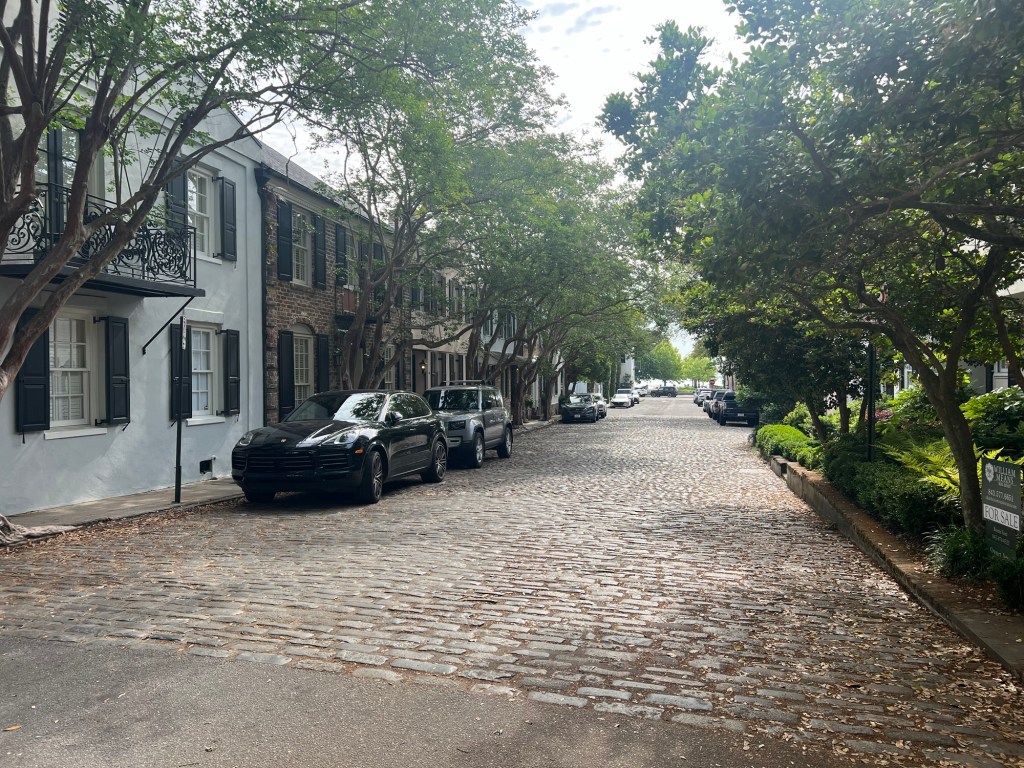
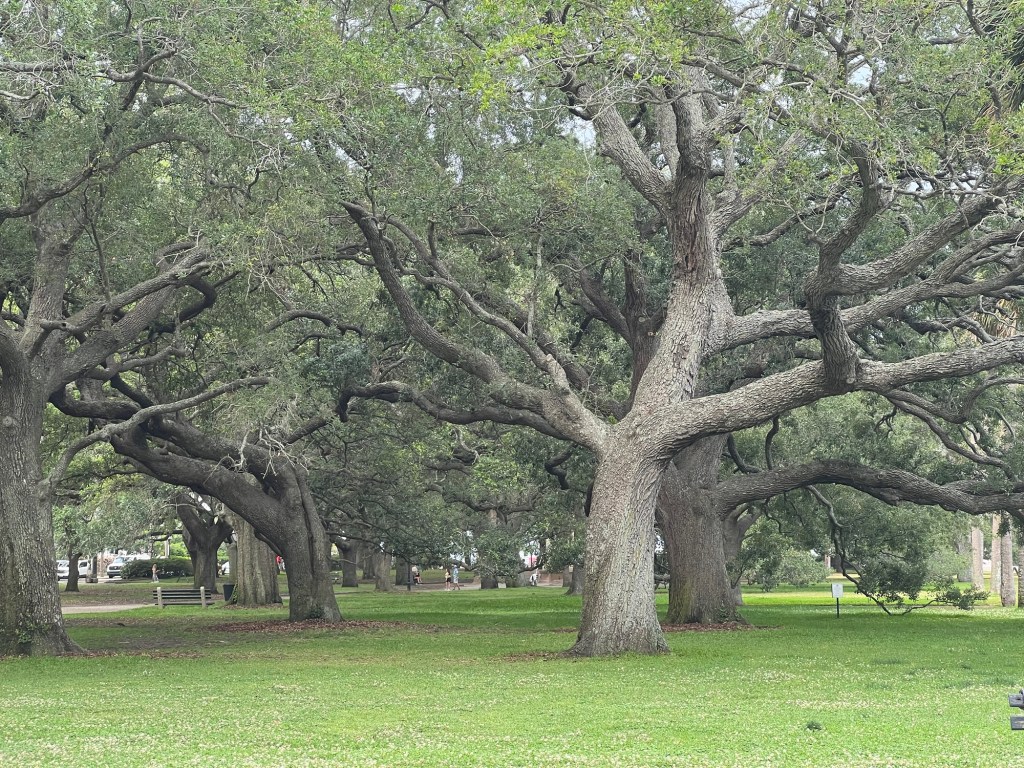
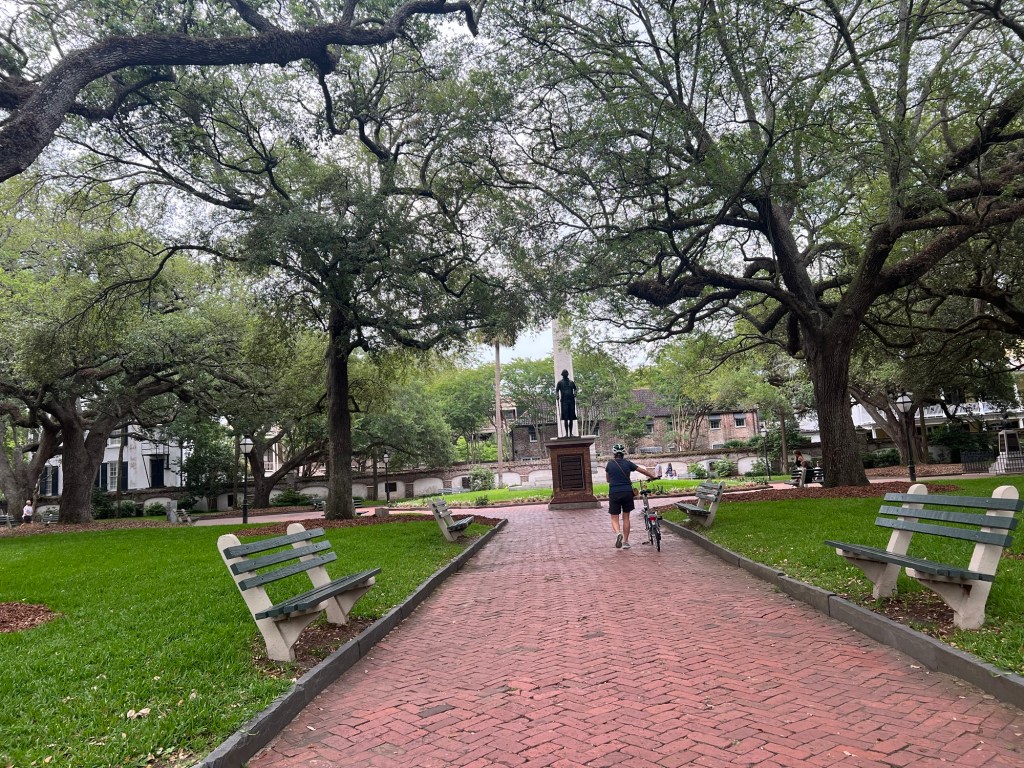
We explored Charleston in the old town area along the wharfs and near the markets.
Charleston was founded in 1670 as Charles Town, and quickly became one of the most important port cities in the American colonies.
Charleston was established by English settlers on the west bank of the Ashley River.
It was relocated to the peninsula between the Ashley and Cooper Rivers in 1680.
Its strategic coastal position allowed it to become a hub for trade, particularly in rice, indigo, and enslaved Africans. This strongly supported the colony’s economy.
During the American Revolution, Charleston was a significant battleground.
The city endured a major siege and fell to the British in 1780.
After the war, Charleston recovered and remained influential in the early United States.
By the antebellum period before the Civil War, Charleston was a wealthy, aristocratic city deeply tied to plantation agriculture and slavery.
The city played a central role in the Civil War.
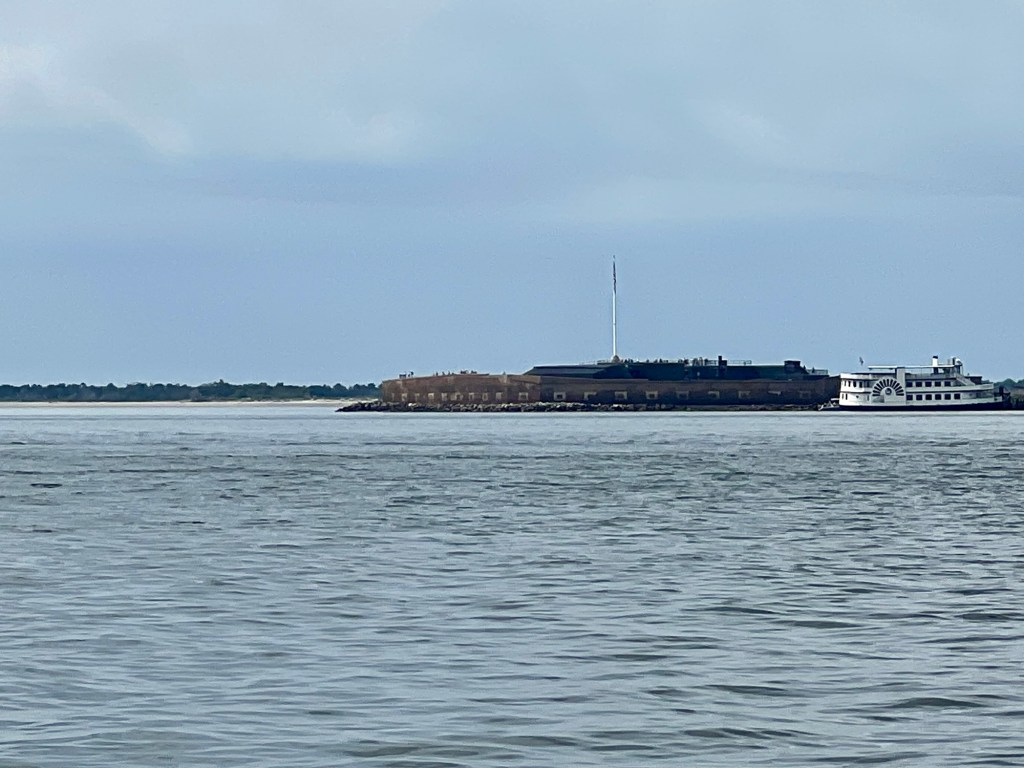
Charleston Harbor at Fort Sumter saw the first shots of the war fired in 1861.
Post-war, Charleston entered a long period of decline. The end of slavery dismantled its economic structure, and the city struggled with poverty and limited industrial development.
It wasn’t until the late 20th century that Charleston saw major revitalization, driven by tourism, historic preservation, and port expansion.
Now it is a vibrant city and a great stop on the Loop.
An interesting museum that we went into was the Old Slave Mart Museum.
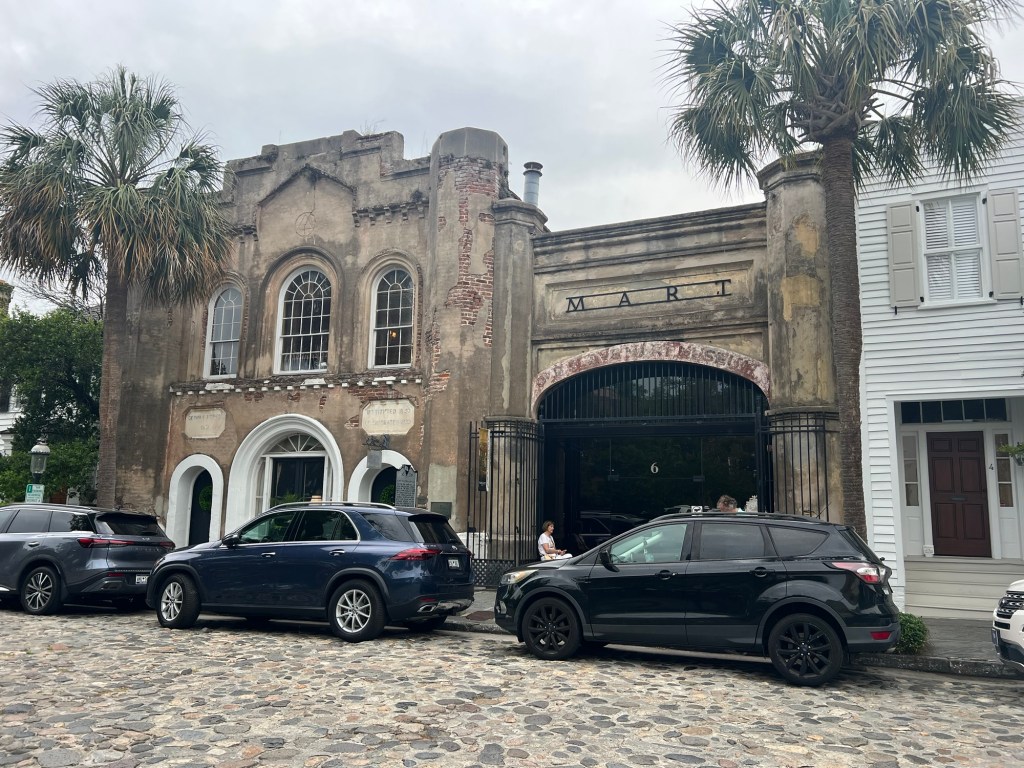
It was a very worthwhile, educational visit.
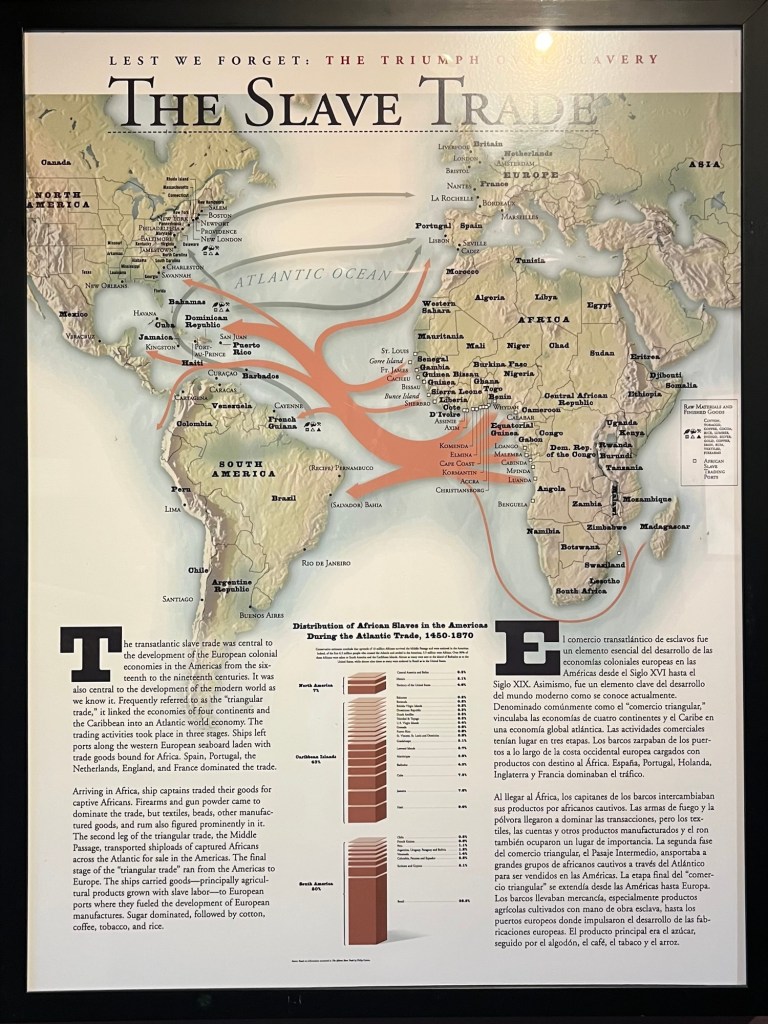
We read the history about the slave trade before it was abolished in 1863.
One are the things I had not realized as we had been voyaging along the Georgia and Carolina Low Country was how much the landscape had been affected by the hard work of slaves.
Many of the dikes along the waterways had been built by slaves for the rice plantations. You could feel their presence when you took time to think about it as we traveled through Low Country.
A statistic that shocked me was that over 10 million individuals survived the trip from Africa for the slave business. That doesn’t count the poor souls who did not survive.
That’s like kidnapping the entire population of the San Francisco Bay, plus some of Sacramento for 400 years.
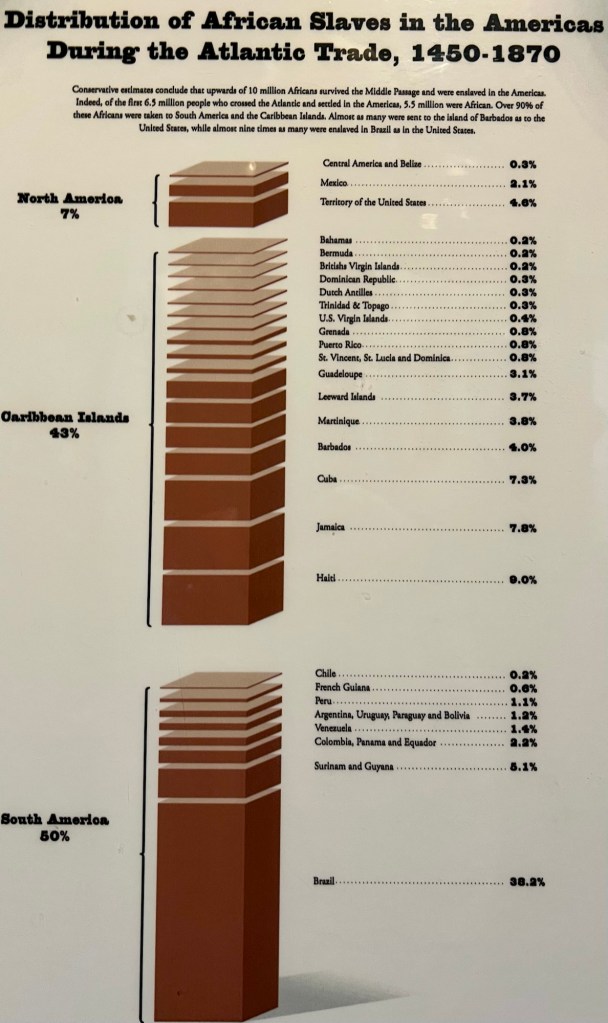
What also surprised me was that less than 5% of those slaves were brought to what is now the continental US. Canada and Mexico also had a very small number of slaves compared the the rest of the Americas.
The vast remainder were taken to the Caribbean Islands (43%) and South America (50%), more than 8.5 million slaves that survived the journey across the Atlantic between them. The island of Barbados had more slaves imported than the entire US.
The last night in Charleston, we had dinner with some relatives: one of my cousin’s son and his wife. It was a celebratory dinner as they had some news to share. We had a great time.
The next morning we took off for our next anchorage, which was a six hour trip up to Duck Creek Anchorage.
There are some thunderstorms in the area and we cautiously made our way through them as they blew over us.
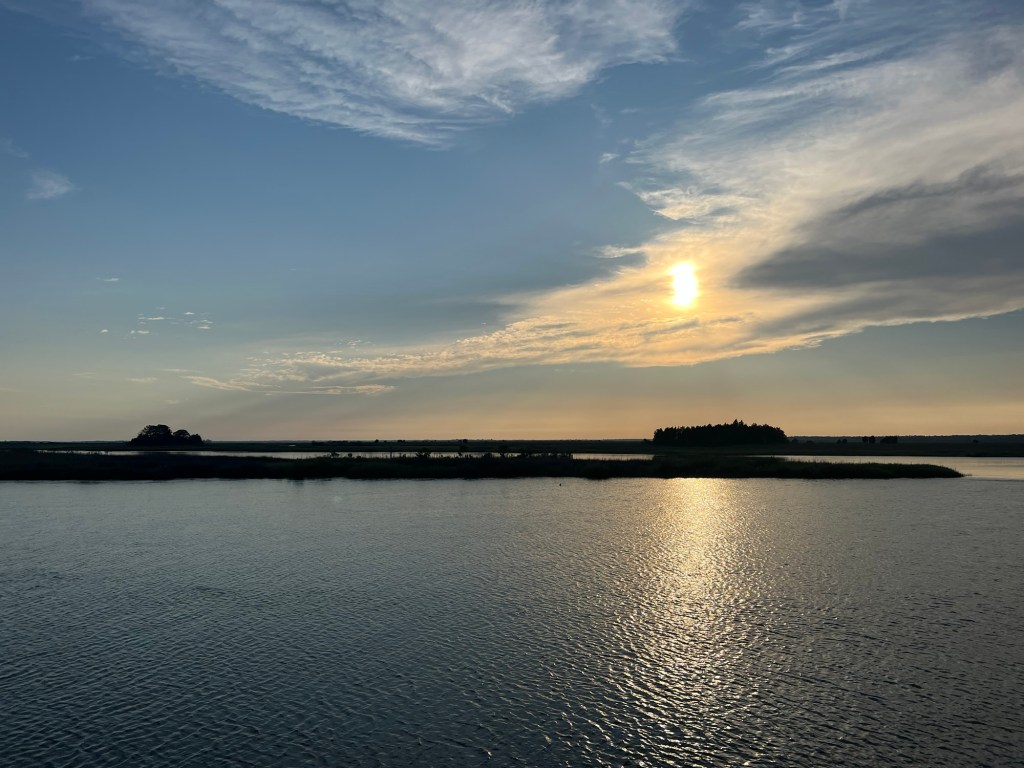
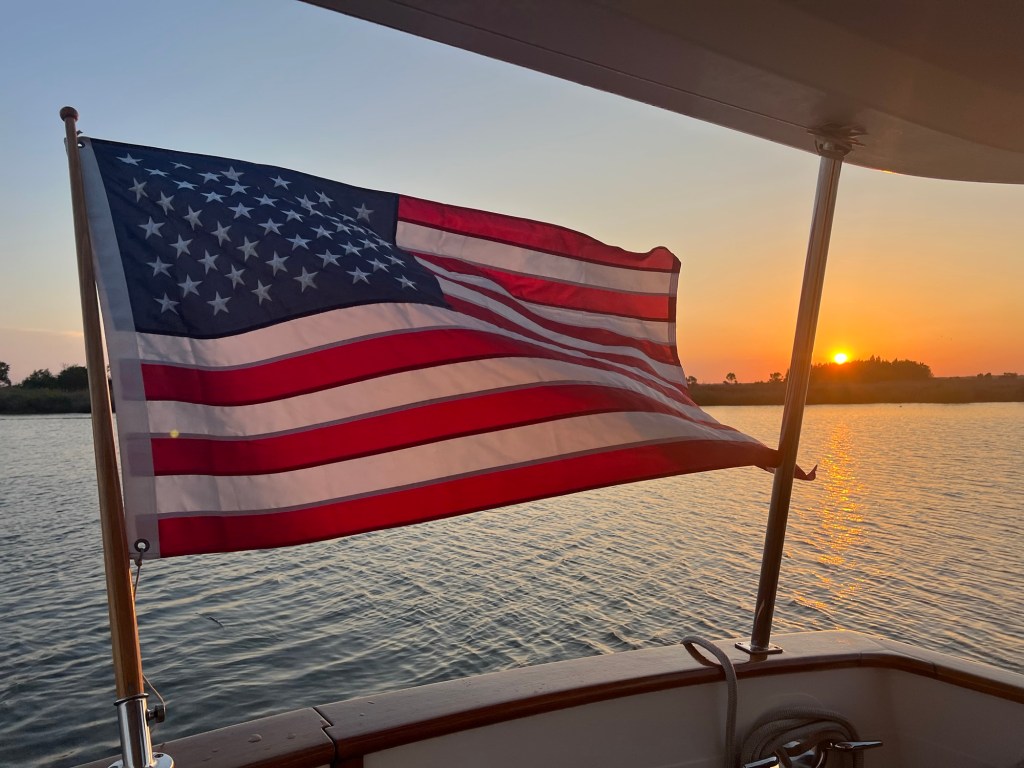
We anchored and settled in for the evening and had another beautiful sunset.
One of the things we noticed when we anchored for the night was that there was oil on the anchor chain.
The chain locker has no source of oil except the gearbox on the windlass.
The windlass is what raises and lowers the anchor and its 250 feet of 3/8” hi test anchor chain for us.
I stuck my head in the anchor locker and immediately noticed that an oil leak had developed on the gearbox of the windless.
A few phone calls later and after talking to a technician, we had a new gearbox on order that should be waiting for us in Beaufort, South Carolina, our next major destination.
You know what BOAT stands for, right?
Bring On Another Thousand.
We went to bed.
The next morning, we are startled awake by a huge gust of wind.
We both got up and ran around, closing all the port holes and windows as it had started to rain.
I looked at the anemometer on the pilot house instruments which was measuring the wind speed. The wind was blowing over 50 miles an hour. It lasted about five minutes. That was better than a strong cup of coffee to wake you up!
It was a classic squall, followed by some thunder and lightning.
The storm soon passed and the day turned into a beautiful day.
We picked up and left the anchorage and went up the Waccamaw river for the next part of our adventure.

 Selkie