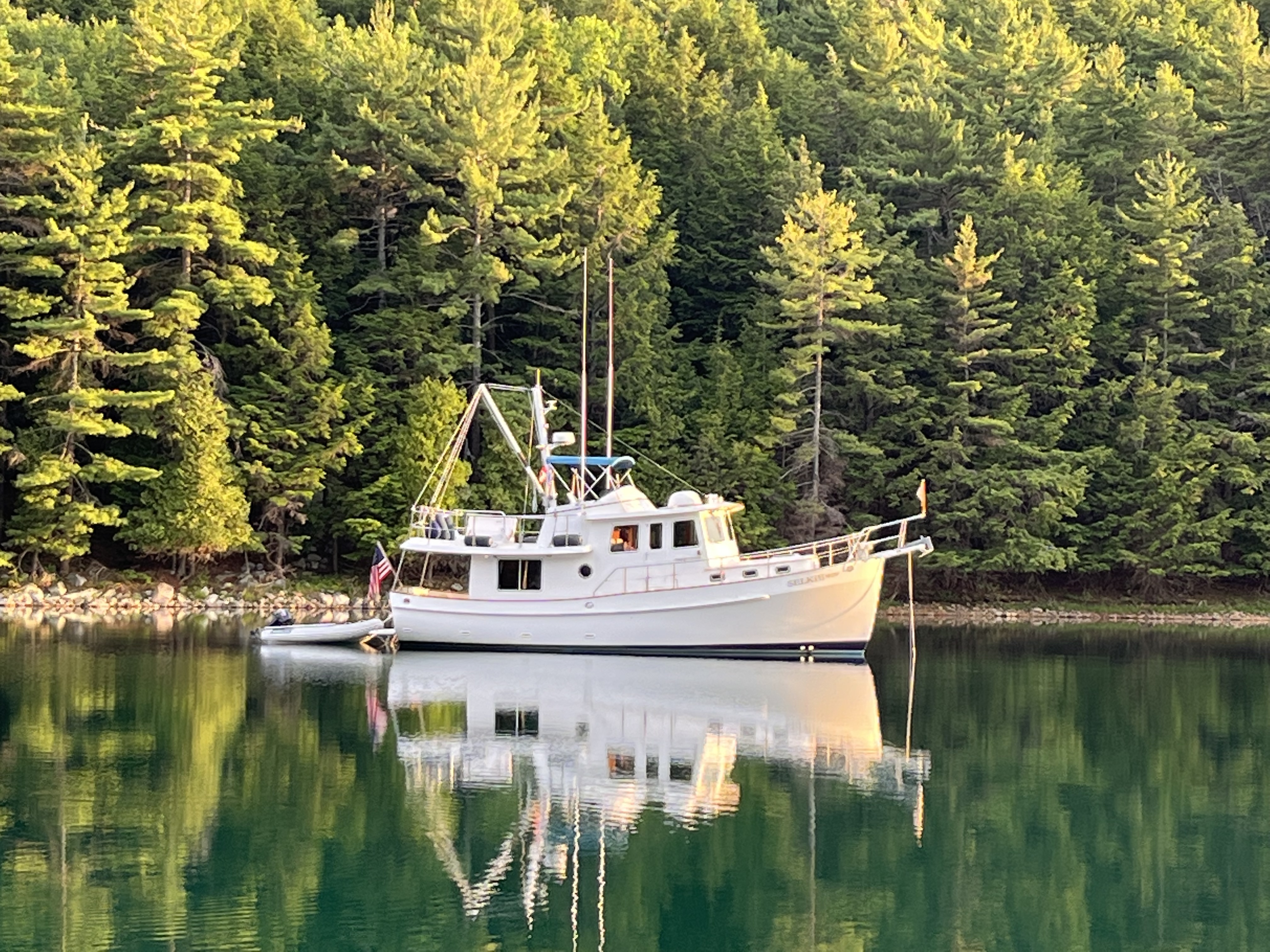
One of the things Libbie and I have discovered about doing the Loop is that it is much more fun to do it on your own terms, rather than thinking the Loop dictates a schedule.

We have completed 4,700 miles of our journey, and Selkie has served us well. But with all our other things we are active with, it’s not a good idea to spend a year straight on Selkie. This winter has proved to be no different.
When the Loop dictates a schedule, that means you are in the Great Lakes in the Summer, the River System in the Fall, Florida and her surrounding coasts in the Winter and the Eastern Seaboard in the Spring.
When you do that, you can miss a lot.
For example, during the summer of 2022, we blazed through northern Lake Huron to reach Mackinaw City for a family reunion. We saw several places where we wanted to linger, but could not. We were grateful we were able to return to the North Channel and Georgian Bay last summer.
It was rewarding to be able to explore that area, and we generated memories and friends that will last us the rest of our lives.
We saw many Loopers slip by some wonderful spots, because they were needing to keep moving to complete their Loop in a year.
We were grateful we had more time.
Now, Libbie and I needed to be back home for the Spring so we could finish the ski season, and I could finally get my right shoulder fixed.
Finishing the ski season meant Libbie could continue her work as a Western Region Examiner for the Professional Ski Instructors Association.
Fixing my shoulder meant that I was going to be restricted in any activity for about three months while I waited for things to heal, but that once fixed, I could use my right arm as it was intended again.
However, once the three months of rehab was complete, Selkie would be in the middle of Hurricane Season, not to mention being in Florida in the heat of summer and humidity, neither of which are desirable for Selkie, Libbie and me.
We had to find storage for Selkie for the summertime.
We made a reservation at a storage facility at Port Charlotte from March through November.
That meant we needed to head back north from Naples along the Gulf Coast.
We left Naples on a calm day and headed north to Fort Meyers Beach.
We spent two nights on a mooring ball there, which was pretty much the only marina available to transient boaters in the area. Many of the marinas are still devestated, rebuilding, or both.
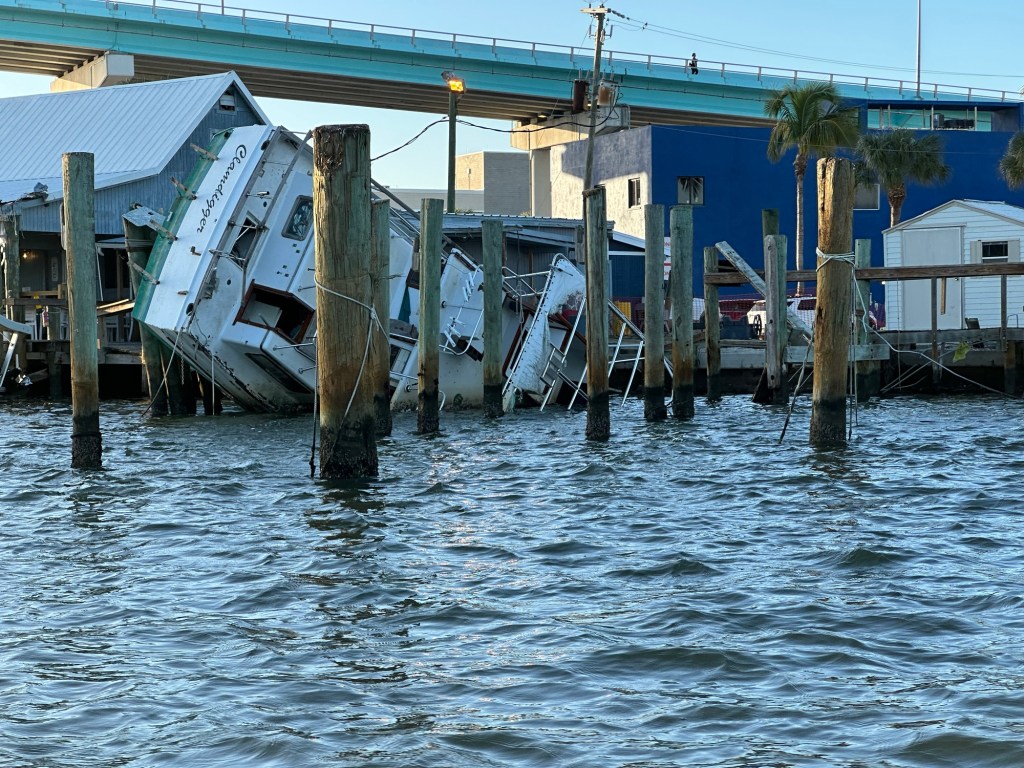
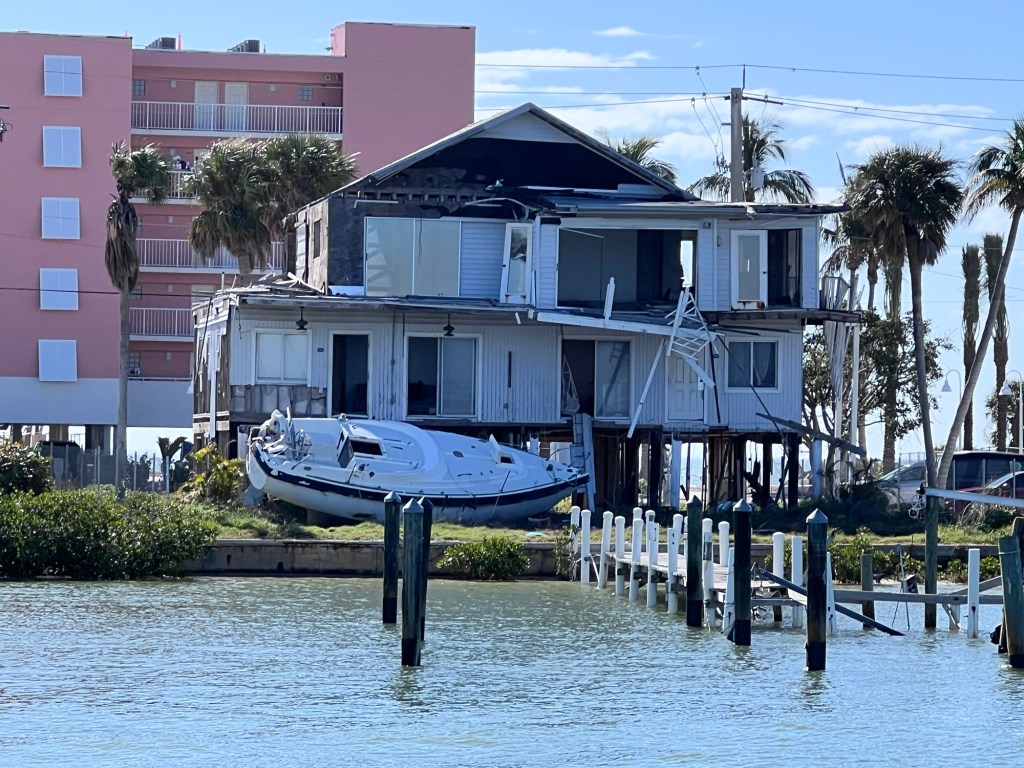
We walked Fort Meyers Beach and were stunned at the level of devastation still evident there, even after 16 months.
The next destination was back to Cayo Costa, where we spent two nights.
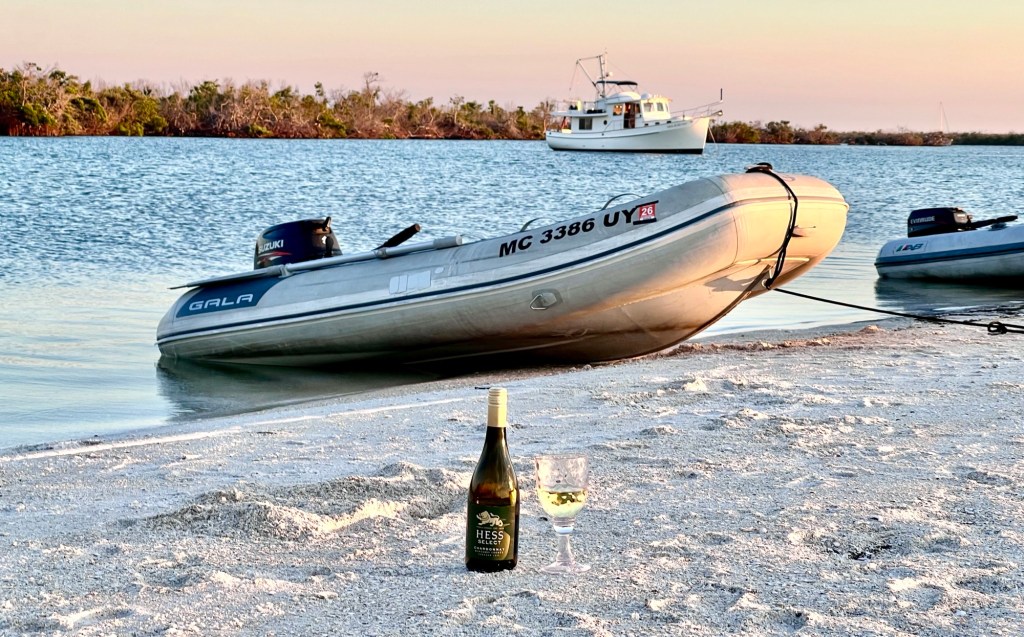
The second night, one of our buddy boats showed up, and we spent the evening in a small beach next to our boats.
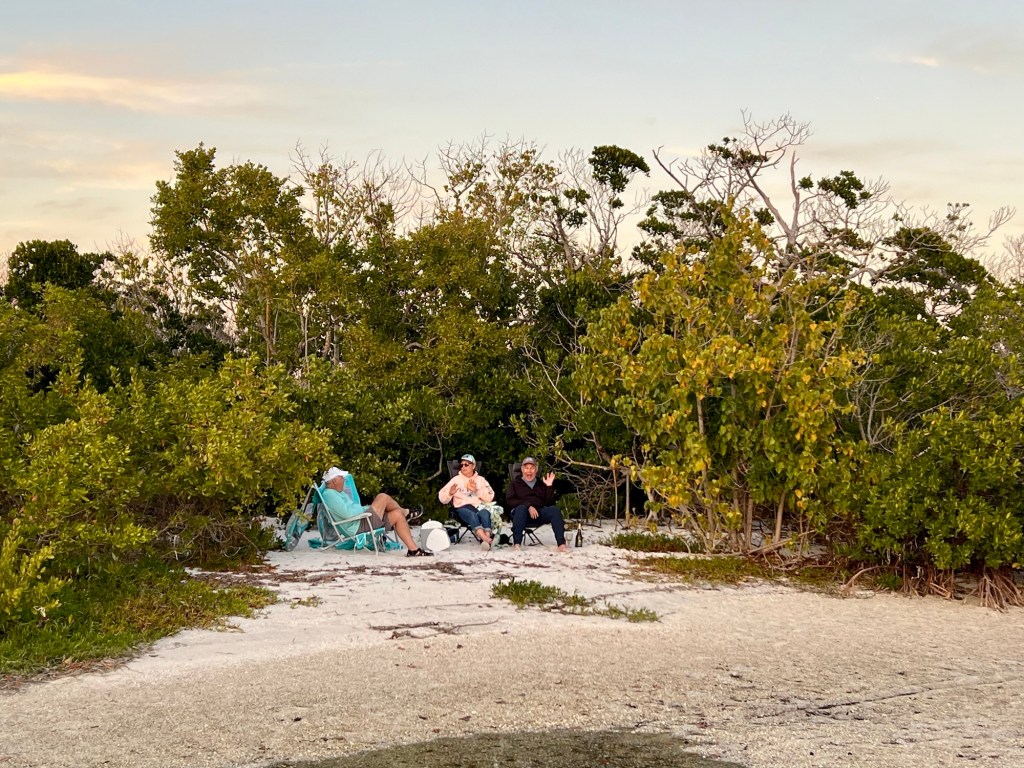
We had planned on spending a little time recreating together.
Unfortunately, our toilet decided to break, as toilets and other appliances we take for granted do when we have something fun planned.
Luckily, we had the spare parts on board, but I spent a few unplanned hours figuring out how to take apart the toilet. In a boat, it’s usually pretty tight working quarters, and this was no exception.
However, after some careful trial and error, I got the toilet apart, cleaned, broken parts fixed and back together.
The toilet now works as good as it ever has.
The next day, we headed to Cabbage Key, a legendary resort in the area, and one that you can visit to get a taste of what old Florida
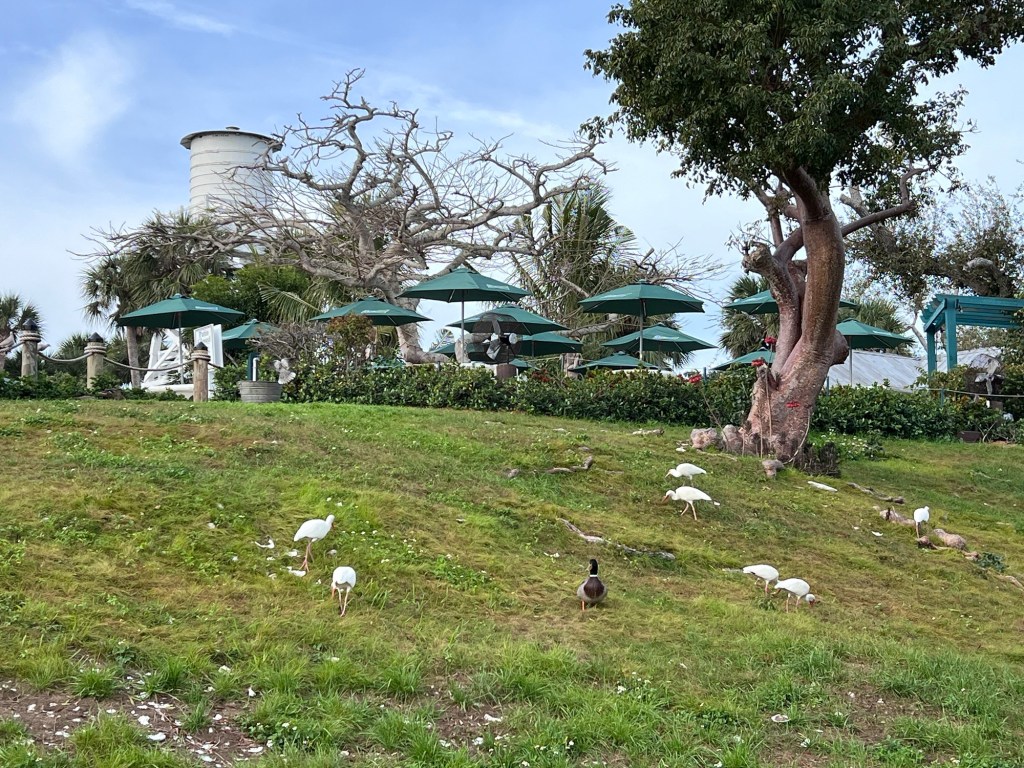
We docked and got ourselves settled. There was a lot of boats and people when we first got there, but as the afternoon wore on, the crowds thinned out, and only 2 boats remained at the marina: Selkie and our buddy boat.
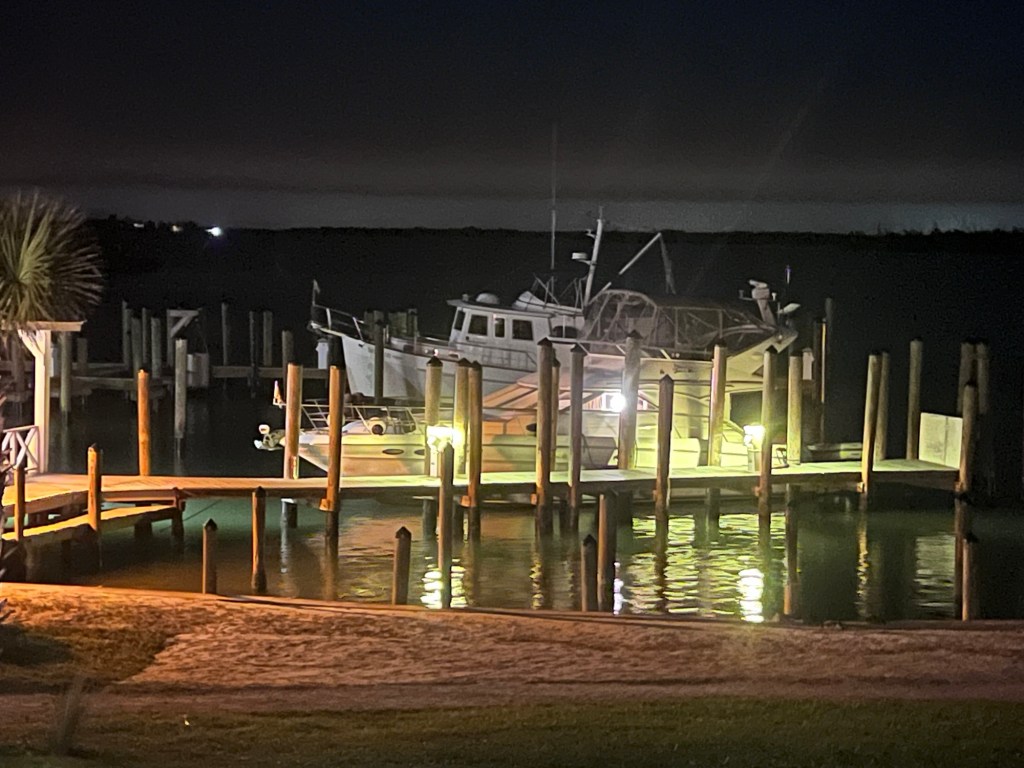
The resort is famous for a number of reasons, not the least of which it’s said Jimmy Buffet wrote Cheeseburger in Paradise there.
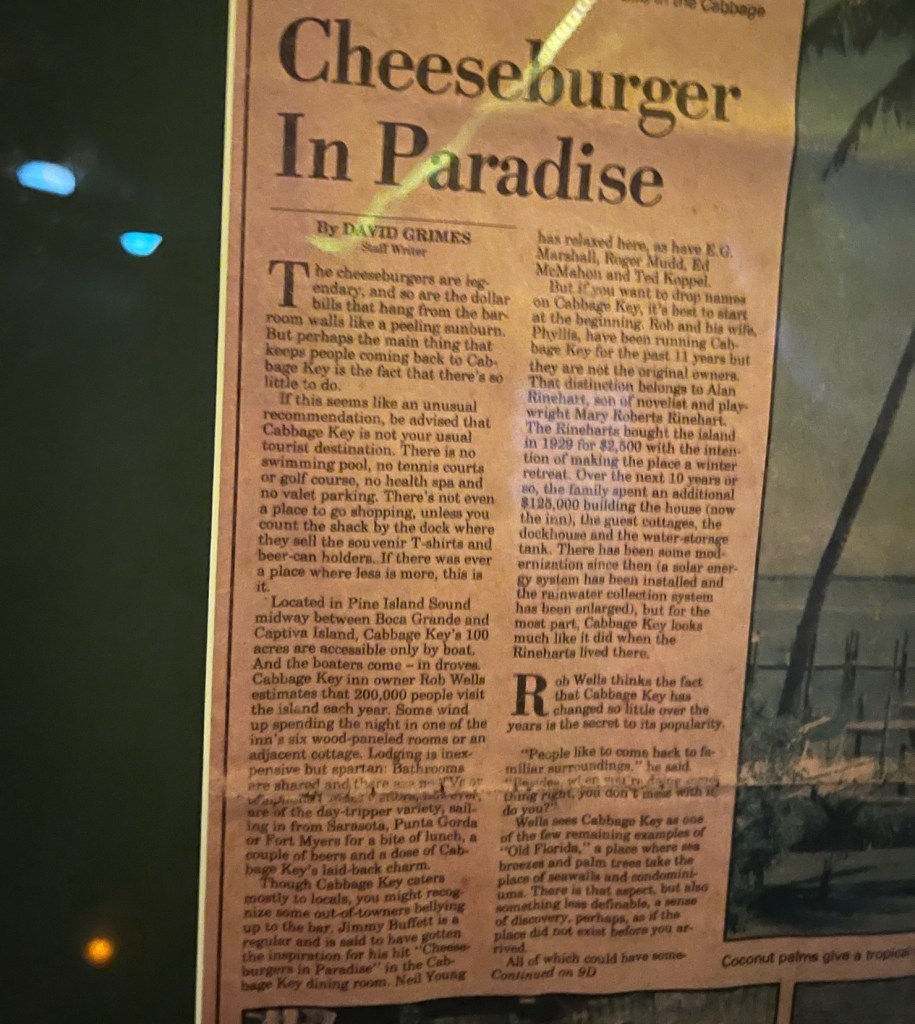
In the bar and part of the adjoining restaurant, thousands of dollar bills hang from the walls and ceiling, signed by folks from all over the world.
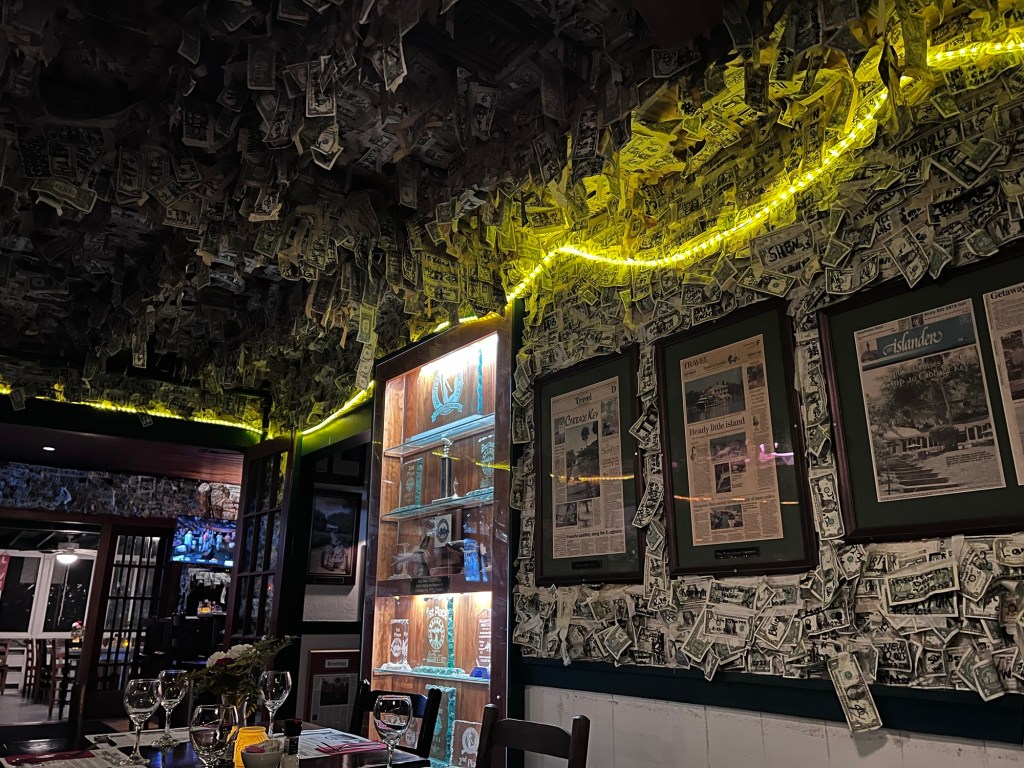
We had a great dinner under those thousands of dollar bills taped and pinned to the ceiling.
The next morning, Libbie fished the docks and I went for a hike.

As I walked the nature trails on Cabbage Key, I could start to hear jets flying overhead coming into land at Fort Myers.
I started to get a little excited about our next steps in our journey, which included going home.
It was exciting to think about what all the next things coming up in our lives. We’ve been extremely blessed to be on this journey and are deeply appreciative of the opportunity we’ve had.
It’s been a disruption to our lives, but a very positive one in many ways.
The famous Warren Miller once said, “Adventure is the invitation for the common man to become uncommon.” I really think that holds true.
Walking the paths at Cabbage Key is a calming experience. The total trip is less than two miles as Cabbage Key is small. The trails are made up of sand, seashells, and roots wide enough for an ATV to make it through. but they’re very well-maintained.

Cabbage Key is in part of the body of water made up by Gasparilla Sound, Charlotte Harbor and Pine Island Sound. The Islands of Gasparilla, Cayo Costa, Cabbage Key, Useppa, the Captivas and Sanibel remind me of growing up in northern Michigan in some respects.
The smells and vegetation are very different.
But the seasons in the summer in Michigan are just as pleasant as winters can be here in Florida (El Niño notwithstanding).
The sounds of the boat engines running in the distance reminded me of waking up at my grandparents’ place in East Jordan on Lake Charlevoix in Michigan, listening to the deep throttled Chris Craft boats moving up and down the lake early in the morning as fishermen went out to catch fish.
The deep rumble of those inboards has been mostly replaced by the high-pitched wines of outboard motors, but the feeling is still the same. It’s a beautiful area and I’m glad to see it recovering as well as it is after going through such a devastating storm 16 months ago.
The paths on Cabbage Key are strewn with animal footprints. There are a lot of raccoon tracks around the cabins and outbuildings on the island as well as occasional lighter footprints of birds and lizards.
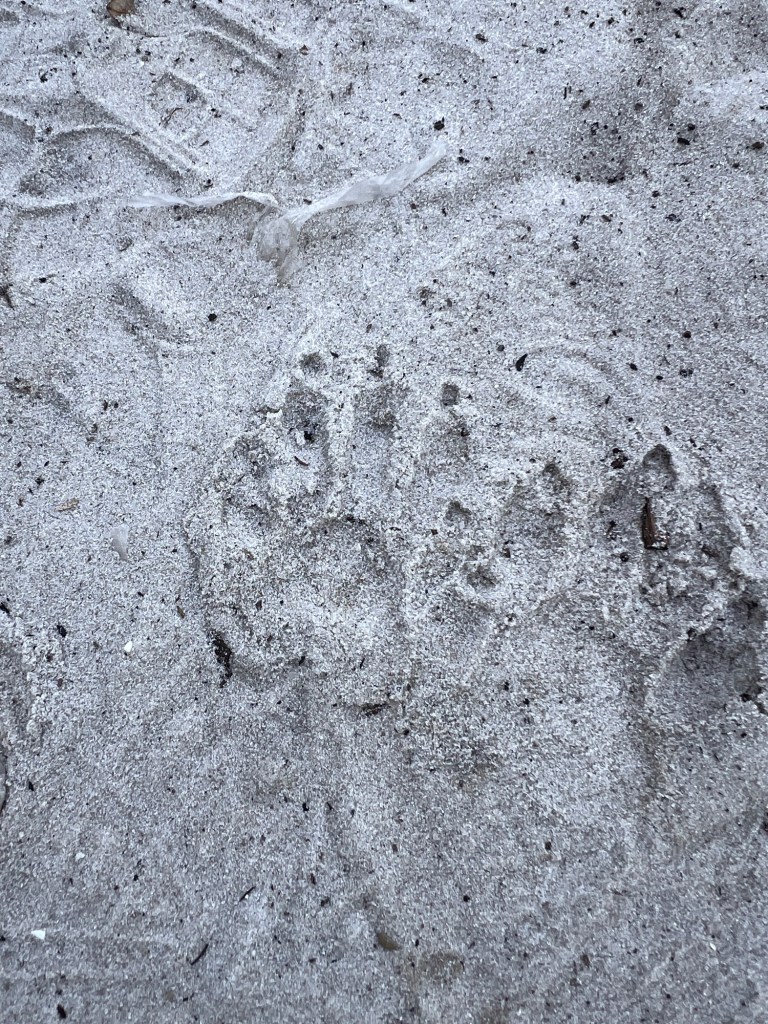
The animal sounds are a little peeps of sparrows and smaller birds, mixed with the screams of bald eagles and high-pitched chirps of the osprey as they’re hunting and calling to their mates.
That morning, we left Cabbage Key and headed to some friends’ home dock at Punta Gorda.
We had accepted an invitation from them some time ago, and had made it our last stop before putting Selkie in storage.
We had quite of prep work to do as we were going to put Selkie on the hard again for the summer.
We spent two nights on their dock.
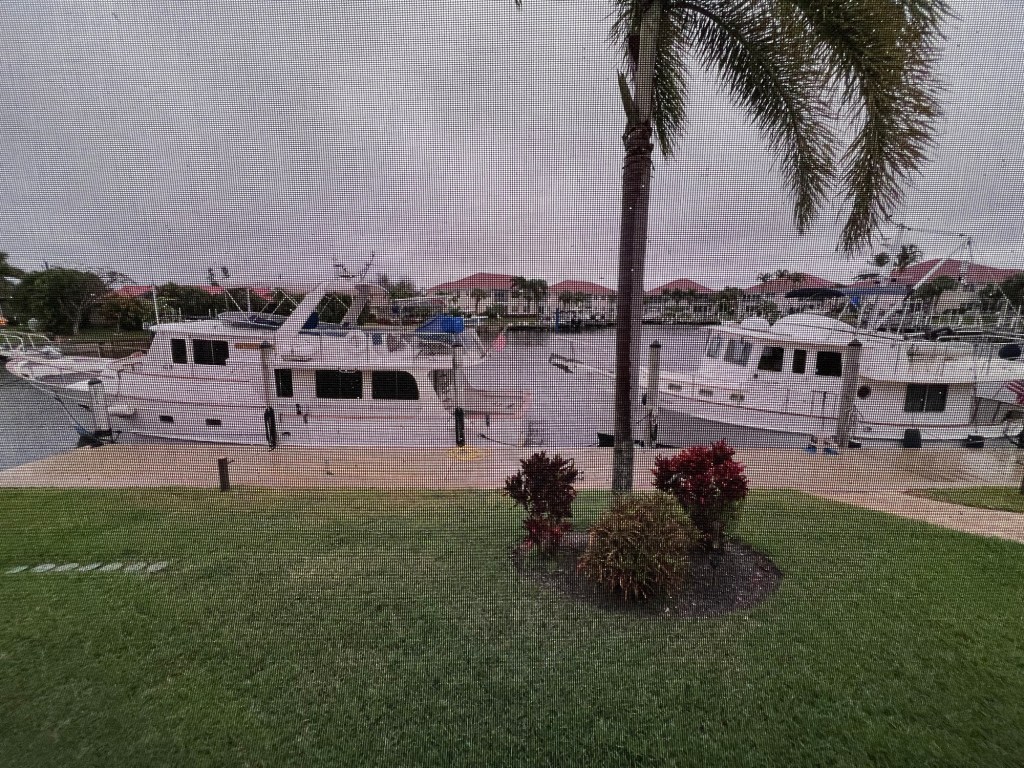
We went out to dinner one night and I cooked dinner one night. They were gracious hosts and allowed us to work on Selkie (they were working on their boat right next to ours at the same time).
We left Punta Gorda on a beautiful, clear crisp day with very little wind in the morning.
We left close to low tide, making sure we could make it with the water depths in Port Charlotte Harbor (which can be pretty shallow) and headed to the entrance to the canal that served the yard.
The entrance to the canal is a tricky entrance.
There is a very narrow, shallow channel and a lock. Selkie could not go in at extreme low tide.
The lock keeps brackish freshwater in the canal and saltwater in the bay.
It’s favorable from an engine maintenance standpoint because we could flush Selkie’s engines with fresher water before putting her on the hard in storage.
We came to the channel, and found a sailboat aground blocking half the canal entrance.
We were familiar with the make of the boat, and knew that it drafted at least a foot more than us. There was no one on deck, as the owner was waiting for the tide to rise and allow the boat to float off the bottom.
It still made for a dicy entrance.
We slid by that boat with about 2′ to spare… and didn’t touch bottom, even with the depth sounder alarming.
Coming into the lock, it seemed like it was almost the same size as Selkie.
Width-wise we probably had 2 to 3 feet to spare but lengthwise was probably about 15 to 20 feet. And there was another small fishing boat in front of us.
The lock water level is raised and lowered by opening and closing the gates the boats enter and exit from, as opposed to controlling valves. So there’s a bit of a surge that happens and when you’re trying to hold an 18 ton boat in place, it can be pretty hard.
It was a little unnerving.
I had to go to the helm, moving the transmission from back to forward to back again to control Selkie’s movement as the surge hit us.
We got through the Lock without any crunches and headed down the Canal to the storage facility.
It took an hour and a half to traverse the canal.
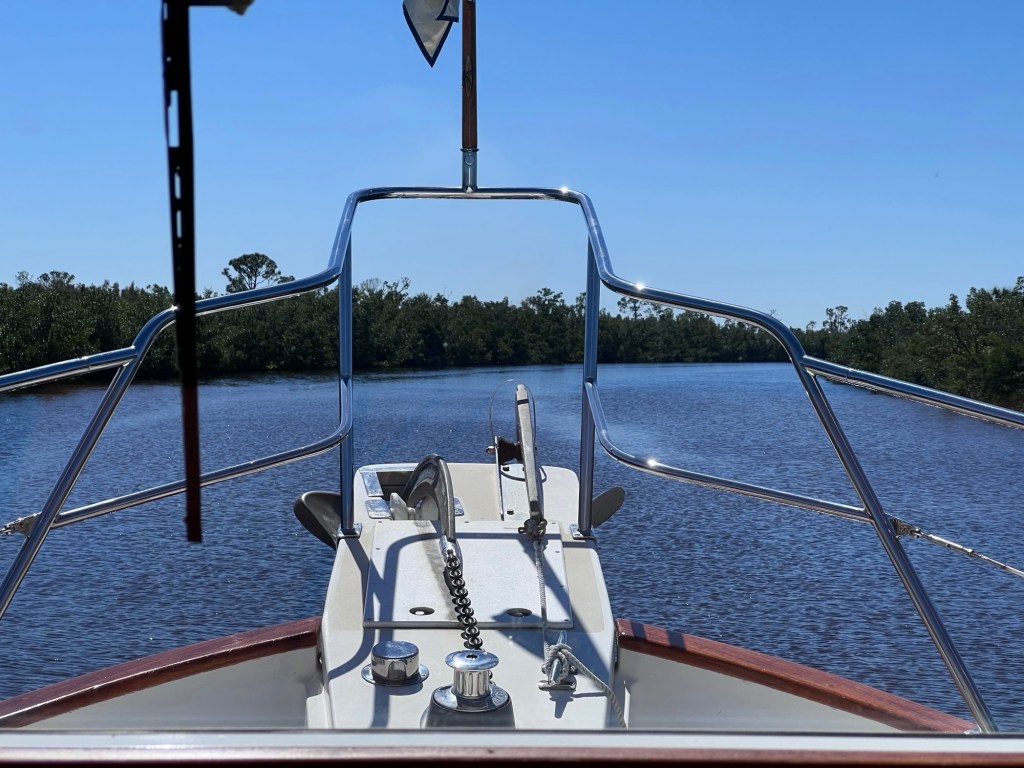
We docked at the facility and made final preparations to pull Selkie out of the water. We slept on the boat that night.
The next morning at 8AM, we moved Selkie to the boat lift well, and she was pulled out of the water. She was moved to her storage area.
We did laundry, did a final cleaning, plugged in Selkie to power, and set up a dehumidifier with fans to keep the humidity (and therefore any mold problems) at an acceptable level.
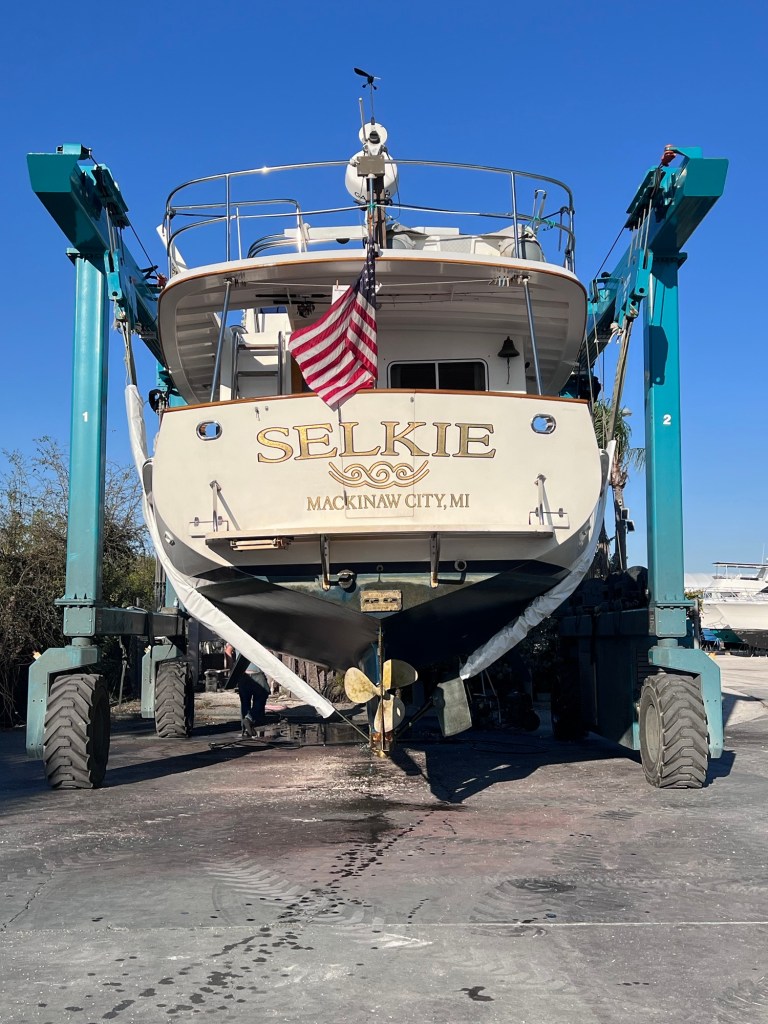
She was in the best shape possible for the summer.
One of our friends (the friend from college that had recently reconnected with me) had offered to pick us up and take us to her place for the night before our flight out, and we accepted her very generous offer.
She picked us up, took us home, gave us a bedroom to sleep in, access to showers, and fed us a steak dinner. We met her husband for the first time, who was also a lot of fun. He’s also a good mixologist. We had a great time reconnecting again…
The next morning, our friend took us to the airport.
We took off, and as we ascended, we could look back up the Florida Gulf Coast a hundred miles where we had spent the past two months of our lives exploring. It was a beautiful sunny day, and memories floated back to both Libbie and me as we pointed out places we had stayed.
The 2024 part Loop was particularly challenging in many ways.
Having to push down the River System in the Fall because we needed to work with the 300 other Loopers that wanted to be on the River System at the same time was a challenge, stressful, and a lot of work.
Anchoring out where it worked for us often meant we had to be alone, without other Loopers around, but Selkie took great care of us along the way.
Weather systems came and went, but we stayed warm and dry.
Being flexible in our trip allowed us to discover parts of Florida that we would not have otherwise paid much attention to, and we are better for it.
The friends we made, as well the friends we reengaged with after years… and decades… made it all more than worthwhile.

We’ve a lot of things to do that will keep us busy the next eight to nine months.
Even so, Selkie sits quietly, under cover, in good shape, waiting for our return.


 Selkie
One reply on “Ready for Summer”
Nice wrap up. Welcome home!!!
LikeLike